Plant care
Alocasia care indoors: read the plant, not the calendar
· Updated
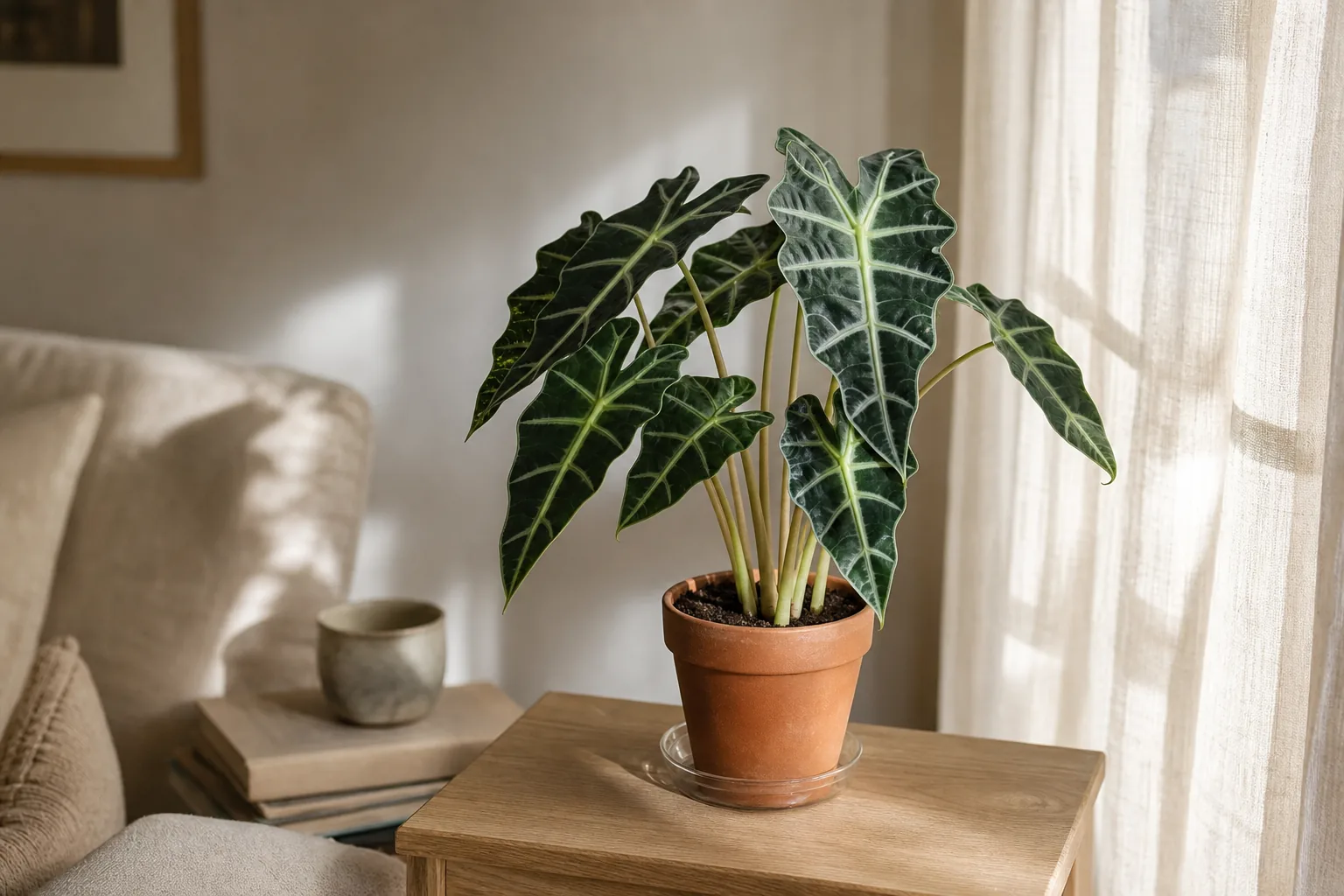
What an Alocasia actually wants indoors is straightforward in principle and a little tricky in practice: bright, indirect light, an airy well-drained mix, a watering rhythm read from the pot rather than the calendar, stable indoor temperatures away from cold drafts, and light feeding only while the plant is actively growing. A winter leaf drop is a common seasonal pattern, not an automatic death sentence. The deciding signal during a slowdown is whether the corm at the base of the plant still feels firm.
That is the working frame. The rest of this article explains the conditions that change the answer — the room, the season, the medium, the pot — and what to do with the plant you actually brought home, whether the tag said “Polly,” “Amazonica,” “Frydek,” or just “Alocasia.”
What “Alocasia” usually means at a nursery
The Alocasias sold at general retailers are usually a small group of closely related hybrids rather than a single species. The names most readers encounter include Alocasia amazonica (often sold as Alocasia × amazonica, sometimes labeled “Amazonica”), Alocasia amazonica “Polly” (a compact, heavily veined selection), Alocasia micholitziana “Frydek” (sold under the “Green Velvet” common name), Alocasia “Black Velvet” (small, dark, velvety leaves), Alocasia “Stingray” (named for the tail-like leaf tip), and Alocasia zebrina (sold more for striped petioles than its leaves).
Taxonomy in this group is unsettled in hobbyist literature, and parentage is debated. For care, the indoor requirements are broadly similar across these retail forms: bright, indirect light, an airy medium, careful watering, and warmth. A single care framework covers most of them, so the reader does not need to memorize a list.
If you want to identify the exact cultivar for a toxicity lookup or to match your plant to specific care notes, the plant tag, the seller’s listing, or a photo posted to a community database is usually enough. Note the botanical name exactly as printed — do not paraphrase it — and use that exact name when you verify safety information.
Why Alocasia has a reputation — and what is real
Alocasias are often sold as easy tropical plants and then blamed for being difficult. The real story is that they are observation plants, not scheduled-care plants. They respond quickly to a missed watering, an overpot, a cold window, or a sudden move. They also recover more slowly than common aroids like pothos or monstera once they start to decline.
That is why the rest of this guide is built around what to observe, not what to do on a particular day.
Read the light first: where an Alocasia actually wants to live
Bright, indirect light is the consistent recommendation across university extension and horticultural sources. An east- or west-facing window with the plant set back a step or two from the glass is a typical good spot. Direct sun through the glass can scorch the thin leaves. Deep interior shade produces leggy petioles and weak, pale new growth.
The honest test is not a lux meter. Look at the spot at midday: can you read a book comfortably without turning on a lamp? If yes, an Alocasia is probably happy there. If the spot is dim enough that you need a flashlight, it is not.
Light is the single biggest lever a reader can pull, and getting it right buys a lot of slack on watering. The room-by-room method is covered in how to read the natural light in your room before you place a houseplant and is worth the few minutes it takes.
Watering and an airy, well-drained mix
Two rules, in order: fix the medium, then learn the rhythm.
The mix
The corm at the base of an Alocasia is sensitive to sitting wet. A dense, peat-heavy mix straight out of the bag is the most common reason an Alocasia declines indoors. The medium should be airy and fast-draining — something you would describe as chunky rather than fluffy.
Look for a base of potting soil or coco coir, amended with perlite for drainage and orchid bark for airflow. Avoid mixes that feel spongy and stay saturated for days. There is no single correct ratio, and any specific recipe you find online should be treated as a starting point, not a prescription. Read the bag label rather than trusting a brand name alone. The mix-selection framework in how to choose a potting mix for houseplants is the right reference here.
The rhythm
Water thoroughly until drainage exits the pot, then let the top inch or two of medium dry before watering again. The most reliable way to learn this rhythm is to lift the pot right after a thorough watering and again a few days later, to feel the difference between a wet pot and a dry pot. That weight difference becomes your cue, and it is far more reliable than a calendar or a “water weekly” rule. The full method is in how to tell when a houseplant actually needs water.
A few practical signals to keep in mind:
- Petiole firmness. A hydrated Alocasia has stiff, upright petioles. Soft, drooping petioles before the medium has dried usually point to overwatering. Soft petioles with a bone-dry, light pot usually point to underwatering.
- New leaf cadence. A healthy plant in good light produces a new leaf every few weeks during the growing season. If your plant has not put out a new leaf since spring, light is the first suspect, not water.
- Yellowing pattern. A single older leaf yellowing and dying off in fall is usually a seasonal signal. Several leaves yellowing at once with a damp pot usually points to the medium.
Temperature, drafts, and humidity in an ordinary home
Alocasia dislikes two conditions above all: cold drafts and abrupt temperature swings. The University of Wisconsin Extension groups Alocasia with Colocasia and Xanthosoma as “elephant ears” and recommends bringing outdoor-grown plants inside before nights fall into the 30s °F — a useful upper bound on how cold a plant in this group is built to tolerate.
In practice, the same principle applies indoors: keep the plant in typical indoor temperatures and protect it from cold windows in winter, air-conditioning vents in summer, and sun-heated glass year-round. If a window lets in a cold draft at night, move the plant back a meter or two, or close the curtain between it and the glass. The placement-first framing in drafts, vents, and sun-heated glass applies directly here.
Humidity is where Alocasia care tends to get overprescribed. Some sources push a specific humidity number; that is not extension-endorsed, and a typical living room sits well below it. The honest framing is this: humidity higher than a typical living room is helpful, the leaves will tell you whether they need more, and a humidifier is one of several options rather than the only one. Grouping plants together, a pebble tray, and a bathroom or kitchen with more ambient moisture are also worth trying. The measured take is in do houseplants need humidity?
Feeding lightly while the plant is actively growing
Alocasia is a light feeder. A light, infrequent feeding during spring and summer is usually enough. Many growers use a diluted balanced fertilizer at the interval suggested on the product label; the rule that holds up across sources is to feed only while the plant is pushing out new growth and to stop entirely during a slowdown. Fertilizer on a resting plant salts the medium and burns roots, on top of giving a dormant plant no benefit. The longer framing is in houseplant fertilizer basics: when less is the better answer.
The seasonal slowdown: dormancy, leaf drop, and the corm
Indoor Alocasias often lose leaves in fall and winter. There are two reasonable explanations in the horticultural literature, and the practical response is the same either way:
- A genuine seasonal slowdown, where the plant reduces growth and sheds older leaves to conserve energy through low light and cooler indoor temperatures.
- A stress response to lower light, dry indoor air, or a recent move.
The deciding signal is the corm. Brush aside the top of the medium and feel it with your finger. A firm, pale corm with stems that are still solid at the base is a sign the plant is still alive and may resprout. A soft, dark, or foul-smelling corm is not. The wider seasonal frame is in winter houseplant care: an observation guide, and the dedicated troubleshooting companion on dormancy versus decline goes deeper on the corm check.
During a slowdown:
- Reduce watering so the medium stays just barely moist, never wet.
- Stop fertilizing.
- Keep the pot in stable warmth and bright light, even if the leaves are gone.
- Do not repot a leafless plant just to “check on it” — repotting adds more stress.
A resprout is possible, but it is not guaranteed and it does not run on a calendar. If your plant has just been moved or repotted, the broader pattern is covered in why your houseplant is dropping leaves after a move or change.
How to tell a normal slowdown from a real problem
A seasonal slowdown usually looks like gradual yellowing of one or two older leaves, slower new growth, petioles that remain firm, and a corm that feels solid when checked.
Real decline usually looks like rapid collapse of multiple leaves at once, soft or mushy petioles, a sour or rotten smell from the medium, or visible pests. If any of those are present, the medium and the roots are the first place to look.
Common issues: spider mites, yellowing leaves, and crispy edges
Three symptom clusters come up repeatedly on indoor Alocasia.
Spider mites. Fine stippling on the upper leaf surface, fine webbing in the leaf axils, and a gritty feel when you run a finger across a leaf underside are the classic signs. They thrive in dry indoor air, which is why winter is the most common season for them to show up. Inspect new plants before adding them to your collection using how to inspect and isolate a new houseplant after bringing it home, and check the undersides of leaves weekly during the colder months. Treatment options vary by situation, and identifying the pest correctly first is the right step — the spider mites identification post walks through what to look for before any product is used.
Yellowing leaves. Yellowing is a symptom, not a diagnosis. The most common causes on Alocasia are overwatering, a natural shedding of older leaves in fall, low light, and occasionally a nutrient deficiency. More than one leaf yellowing at the same time, with a damp pot, usually points to the medium. The ordered checklist is in why are my houseplant leaves turning yellow?
Crispy brown edges. Often blamed on humidity alone, but the actual causes are usually multiple: dry air, mineral or salt buildup from tap water and fertilizer, underwatering, or root stress. Treating humidity without checking the other possibilities usually disappoints. The diagnostic order is in brown tips on houseplants: a calm diagnostic order that isn’t just humidity.
Repotting, corms, and propagation without overpromising
New Alocasias are often sold in dense, peat-heavy media that does not match the airy mix they want long-term. The temptation is to repot immediately, but Alocasias sulk after repotting and a stressed plant should be allowed to acclimate first. The decision logic is in when does a houseplant actually need a new pot?
When you do repot, choose a pot only one size up with drainage, refresh the medium to something airy, and water in lightly. Expect the plant to pause growth for a few weeks as it re-establishes. The post-repot observation plan is in what to do after repotting a houseplant.
Alocasias produce small cormels in the soil that can be separated and potted up. Success indoors is variable — do not promise yourself a row of new plants from one parent.
Toxicity to pets and people, stated carefully
Alocasia contains calcium oxalate crystals, which cause oral and gastrointestinal irritation if chewed or swallowed. This applies to cats, dogs, and humans.
Two habits worth building:
- Verify toxicity by the exact botanical name on the tag, not the common name, using the ASPCA’s searchable list, and treat your veterinarian as the final word. The verification method is laid out in how to choose a houseplant when you have pets.
- If a pet or a child has chewed any part of the plant, contact a veterinarian or a local poison-control resource right away.
A short observation checklist for the weeks ahead
Week one. Place the plant in bright, indirect light away from cold drafts. Lift the pot dry, water it thoroughly, and lift it again to learn the wet weight. Inspect the undersides of the leaves for pests and any fine webbing. The first-two-weeks plan is in how to acclimate a new houseplant in the first two weeks.
Week six. Expect at least one older leaf to yellow and drop, especially if the plant was brought home recently or if the season is turning. Check the firmness of the petioles, look for a new leaf forming, and adjust watering only if the medium is staying wet for more than a week.
If a slowdown happens. Reduce watering, stop feeding, check the corm, and wait. A firm corm with stable warmth and light may resprout on its own timeline. A soft corm with a sour medium is a different problem, and the medium and roots need attention.
That is the whole framework: place the plant where the light is bright but not direct, water by feel rather than by date, keep it away from cold drafts, feed only during active growth, and read the leaves and the corm before deciding whether a slowdown is a season or a problem.
Sources
- University of Wisconsin Horticulture Extension — Elephant ears (Colocasia, Alocasia, and Xanthosoma): https://hort.extension.wisc.edu/articles/elephant-ears-colocasia-alocasia-and-xanthosoma/
- University of Minnesota Extension — Lighting for indoor plants and starting seeds: https://extension.umn.edu/planting-and-growing-guides/lighting-indoor-plants
- Fine Gardening — Growing Alocasia Indoors: https://www.finegardening.com/article/growing-alocasia-indoors
- Proven Winners — How to Grow Alocasia Indoors and Outdoors: https://www.provenwinners.com/learn/houseplants/alocasia
- The Spruce — How to Grow and Care for Alocasia: https://www.thespruce.com/grow-alocasia-indoors-1902735