Plant care
Anthurium care indoors: light, mix, and the slow rhythm of repeat spathes
· Updated
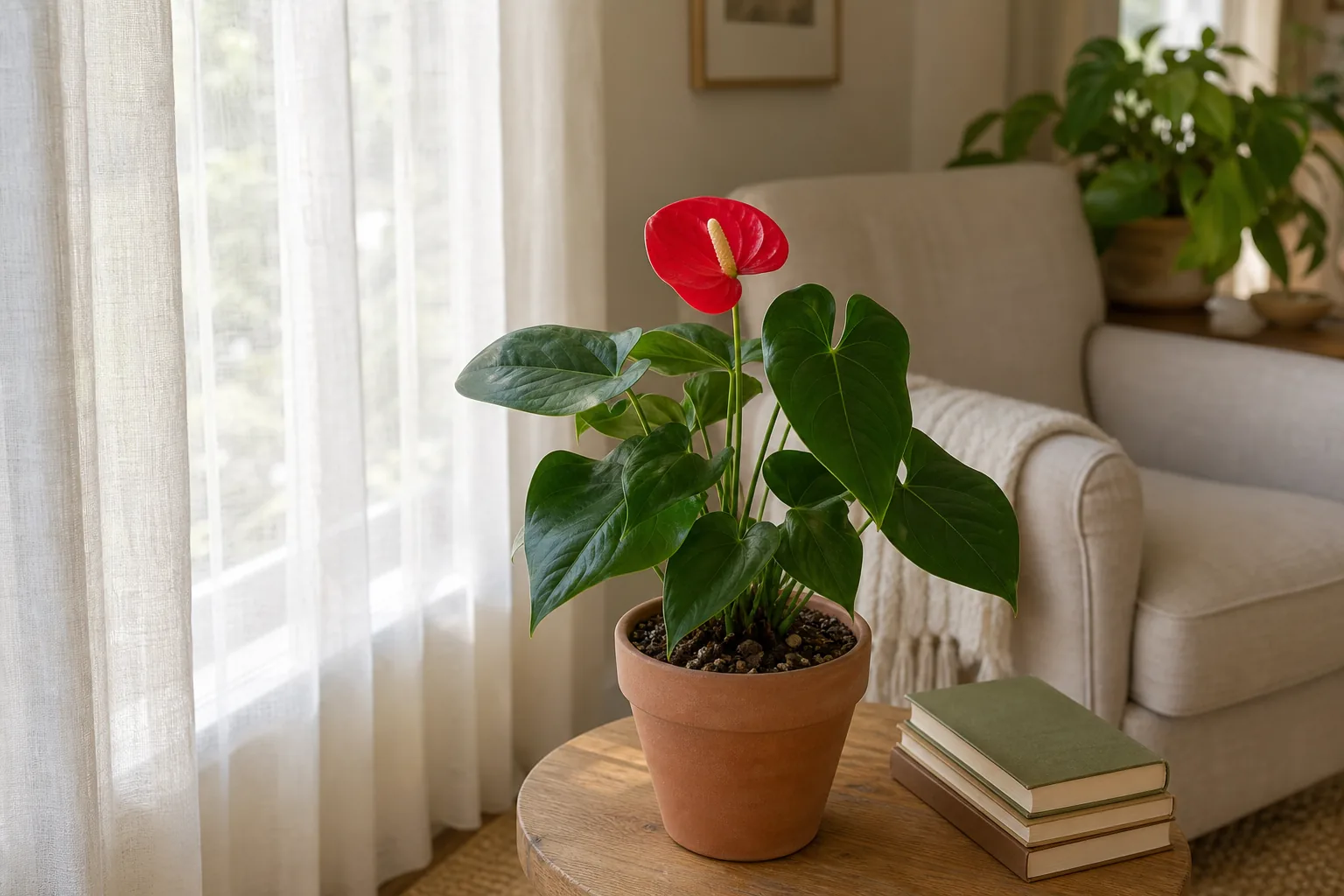
An anthurium — most often a red, pink, or white “flamingo flower” (Anthurium andraeanum), or sometimes a velvety foliage type like Anthurium clarinervium — keeps its bright spathes for weeks at a time and its glossy leaves year-round, but only when its roots can breathe and its leaves sit in real, bright, indirect light. Indoor anthuriums do best in bright, indirect light, in an airy, coarse, orchid-bark-leaning potting mix, watered by feel when the upper mix is dry. Repeat spathes appear on a slow cycle when the plant is stable — never on demand — and yellowing leaves, brown tips, or a refusal to bloom usually point to light, water, or root stress, not a missing fertilizer.
Anthuriums indoors: a flowering aroid with specific expectations
In their native range, anthuriums grow as epiphytes on rainforest trees, anchoring themselves in pockets of leaf litter where roots get plenty of air. That origin shapes nearly every indoor preference: a chunky, well-drained medium, bright light filtered through a canopy, and roots that never sit in cold, soggy soil.
If you have cared for a moth orchid, the comparison will feel familiar — phalaenopsis orchid care follows a very similar logic to anthurium care. Both aroids use a coarse mix and a soak-and-breathe rhythm; both decline fastest in dense, peat-heavy potting soil. Peace lilies tolerate lower light and richer mixes; anthuriums do not. Our peace lily care post walks through that side of the family if you want the comparison. Treat the anthurium as a flowering epiphyte first and a “houseplant” second, and the rest of the choices get easier.
Light: bright, indirect, and a little more than most flowering houseplants
University extension services and botanical gardens converge on the same guidance: an indoor flowering anthurium wants bright, indirect light. UF/IFAS notes that anthuriums may tolerate low light outdoors, but as houseplants they need bright, indirect light to thrive indoors. The New York Botanical Garden recommends keeping the plant close to a window to prevent elongated, leggy growth, and a slightly shaded window in harsh exposures.
In a real home, that usually means:
- An east-facing window with morning sun and bright light for the rest of the day.
- A west-facing window with a sheer curtain, or set back a few feet from the glass.
- A south-facing window shaded by a tree, building, or sheer curtain.
- A north-facing window only if it is genuinely bright; a “low light” apartment corner will produce leaves but few or no spathes.
If you want to verify your spot rather than guess from the compass direction, our guide on how to read the natural light in your room walks through a simple observation method. The honest note is that anthuriums read light slowly — a leaf that looks pale or stretched today may reflect light conditions from weeks ago, which is why “I moved it last week and nothing changed” is a common frustration.
Potting mix: an airy, orchid-bark-leaning aroid blend
Standard potting soil is the fastest path to a struggling anthurium. Clemson HGIC describes anthuriums as tropical epiphytes that prefer a coarse, well-drained medium, and specialist sources frame the root zone as needing oxygen as much as moisture.
A workable indoor mix leans toward bark and perlite rather than peat. Many aroid growers arrive at a similar rough balance:
- Mostly orchid bark (fir or pine, the chunky grade used for moth orchids) for structure and air pockets.
- Perlite or pumice for drainage.
- A smaller portion of peat moss or coco coir to hold a little moisture without going dense.
- A small handful of horticultural charcoal is optional and is often included in pre-mixed aroid blends.
If you would rather start with a bagged mix, our post on how to choose a potting mix explains what to look for on the label and how to amend a mix that holds too much water. The practical test is simple: water should run through the pot in a few seconds, and the mix should feel light and airy in the hand rather than fine and spongy.
Watering rhythm: feel the pot, soak, and let the mix breathe
A fixed schedule — “water every Saturday” — is the most common way indoor anthuriums get into trouble. The right rhythm is read from the pot and the plant, not the calendar.
A workable method:
- Lift the pot right after a thorough watering and notice its weight — this is your “wet weight.”
- Wait. When the upper inch or two of mix feels dry to a finger and the pot feels noticeably lighter, water again.
- When you water, soak the mix thoroughly until water runs from the drainage holes, then let the pot drain freely. Anthurium roots dislike sitting in standing water.
- In lower indoor light or cooler months, expect the dry-down to take longer. In bright, warm conditions during active growth, expect it to be quicker.
Our guide on how to tell when a houseplant actually needs water goes deeper into the finger-and-weight method. Two cautions worth naming: chlorinated or very hard water can leave brown, crispy leaf tips over time, and watering “a little bit every few days” usually keeps the mix damp without ever letting the roots breathe, which is how rot starts.
Humidity and temperature in a real home
Most indoor anthuriums tolerate average household humidity without extra equipment. Grouping plants together, placing the pot in a naturally humid room (a bright bathroom or kitchen with a window), or setting the pot on a tray of pebbles and water will modestly raise humidity around the leaves. Our post on humidity in an ordinary home sets realistic expectations before you buy any equipment. Misting is a short-lived boost that most sources describe as helpful but minor; it is not a substitute for stable conditions.
Temperature is where anthuriums are noticeably picky. They prefer warm, draft-free conditions — broadly the high 60s to mid 80s °F (about 18–29 °C) — and slow down or stop growing as temperatures drop into the 50s °F (around 10–13 °C). Cold window glass in winter, heating vents, and air-conditioning drafts can chill the root zone even when the air feels warm, which often shows up as slowed growth, leaf yellowing, or a refusal to push new spathes. Our piece on drafts, vents, and cold windows helps you read a real room. If your only bright spot is a winter windowsill, consider moving the plant back from the glass at night or rotating it away from the chill.
Feeding lightly to support, not force, repeat spathes
Anthuriums are not heavy feeders. A balanced, water-soluble houseplant fertilizer at roughly half the label strength, applied about once a month during active growth in spring and summer, is plenty. Skip feeding in fall and winter when growth naturally slows. Our houseplant fertilizer basics post walks through the wider “less is more” framework. More fertilizer does not produce more flowers; it most often produces salt buildup on the root zone and brown leaf tips.
How repeat flowering actually works — and why it is slow
A healthy indoor anthurium produces spathes on a slow cycle, not a calendar. Individual blooms commonly last several weeks to a few months under good conditions, followed by a resting period before the next flush. Spent spathes fade, the spadix browns, and the stem can be cut back near the base of the plant to redirect energy rather than harm it.
If your anthurium is dropping spathes or refusing to reflower, the most common reasons — in rough order — are:
- Insufficient bright, indirect light.
- A dense, waterlogged potting mix or an overpotted container with stagnant roots.
- Cold roots from a winter windowsill or a vent.
- Underfeeding is much rarer than overfeeding; check the first three before reaching for fertilizer.
This is also a useful place to mention that “year-round bloom” claims for indoor anthuriums describe a plant in near-ideal, stable conditions. In an ordinary apartment with seasonal light shifts, expect cycles of bloom and rest, not a continuous show.
Repotting: stay slightly snug and never bury the crown
Anthuriums prefer to be slightly snug in their pots. Repotting every 2–3 years to refresh the medium is more useful than jumping up pot sizes. Our when to repot a houseplant post walks through the telltale signs. When you do repot, move up only about an inch in diameter, refresh the mix, and keep the crown of the plant at the same soil line — never bury it deeper, as buried stems rot easily.
This is also a good moment to check the roots. Healthy anthurium roots are firm and pale; dark, mushy, or sour-smelling roots signal rot from a too-dense mix or a pot without adequate drainage. Trim the affected sections with clean scissors and repot into a fresh, airy mix in a similar-sized container rather than a much larger one.
Troubleshooting: yellow leaves, brown tips, no flowers, and limp foliage
Ordering observations rather than guessing at a single cause tends to be more useful than any one remedy.
- Yellowing leaves, often lower or older leaves first, usually reflect a watering rhythm issue, a root problem, or a recent light change. It is rarely a fertilizer gap. Our post on why houseplant leaves turn yellow walks through the same observation-first checklist.
- Brown, crispy leaf tips often point to water quality (chlorine, hardness, fluoride) or chronic underwatering, with low humidity a possible but secondary factor. Our piece on brown tips on houseplants covers the diagnostic order in more depth.
- No new spathes most often means insufficient bright light, an overpotted plant, or cold roots.
- Limp, drooping foliage can mean either very dry mix or very wet, rotted roots — feel before you water, and lift the pot to compare weights.
- Elongated, leggy stems with small leaves point to light that is too low.
Pets, children, and the calcium-oxalate boundary
Anthurium is a member of the Araceae (aroid) family, and like many popular houseplants in that family, its tissues contain calcium oxalate crystals. Chewing or swallowing plant material can cause oral and gastrointestinal irritation in pets and humans. The right response if you suspect ingestion is to contact your veterinarian or a poison-control resource — for cats and dogs, the ASPCA’s toxic and non-toxic plants database is the standard reference for the species-specific record.
If you live with curious cats, dogs, or toddlers, anthurium is best placed out of reach rather than relied on as a “safe” plant. Our post on choosing houseplants with pets in the home explains the verification method. Choosing a spot the pet cannot access, redirecting attention to safer alternatives, and verifying any plant with the ASPCA database before bringing it home are the most reliable habits.
When to ask a local nursery or your veterinarian
A regional nursery that grows anthuriums can usually look at a leaf or a photo and tell you whether the problem is light, water, or mix — and they often stock the bark-based aroid blend you need to repot. For any concern about a pet or child who has chewed plant material, your veterinarian or a local emergency clinic is the right call. We are not a diagnostic service, and plant behavior varies widely between homes, species, and cultivars, so use this guide as a starting point rather than a verdict.