Plant care
Peace lily droop: what it means and how to read it before you water
· Updated
Peace lily droop is one of the most dramatic moments in indoor gardening. The plant can look fine in the morning and by afternoon the leaves are hanging over the rim of the pot like a tired umbrella. The first reaction is almost always to water. Sometimes that is right. Sometimes it is the start of a longer problem.
The short answer: a peace lily droop is a cue to inspect, not a command to water. Before you reach for the can, check the soil a finger-width or two down, lift the pot to feel its weight, glance at any roots you can see, and note the light and temperature the plant has been getting. Droop from genuinely dry soil usually rebounds within hours of a thorough soak. Droop in heavy, slow-draining soil that still feels cool and wet does not, and that difference is the single most useful thing to learn about peace lily care.
Why peace lily droop is a signal, not a verdict
Spathiphyllum (the peace lily’s scientific name) has a fast, reversible wilt response. Its leaves lose turgor, the internal water pressure that holds a leaf upright, quickly when the mix dries out, and they refill quickly when water returns. That is a survival trait in its native range, and it is also why the plant gets accused of being dramatic.
The catch is that several different stresses produce the same floppy posture:
- the mix has actually dried out
- the mix has stayed wet too long and the roots are struggling
- a cold draft or sudden temperature drop chilled the foliage
- the plant has been sitting in light too low to support its current watering rhythm
- the pot is too large or compacted for the roots to keep up with the moisture
Because droop is shared across these causes, it cannot, on its own, tell you which one is happening. The inspection routine below is what actually distinguishes them.
Before you water: a 60-second inspection routine
When the leaves go limp, run through this checklist before adding any water.
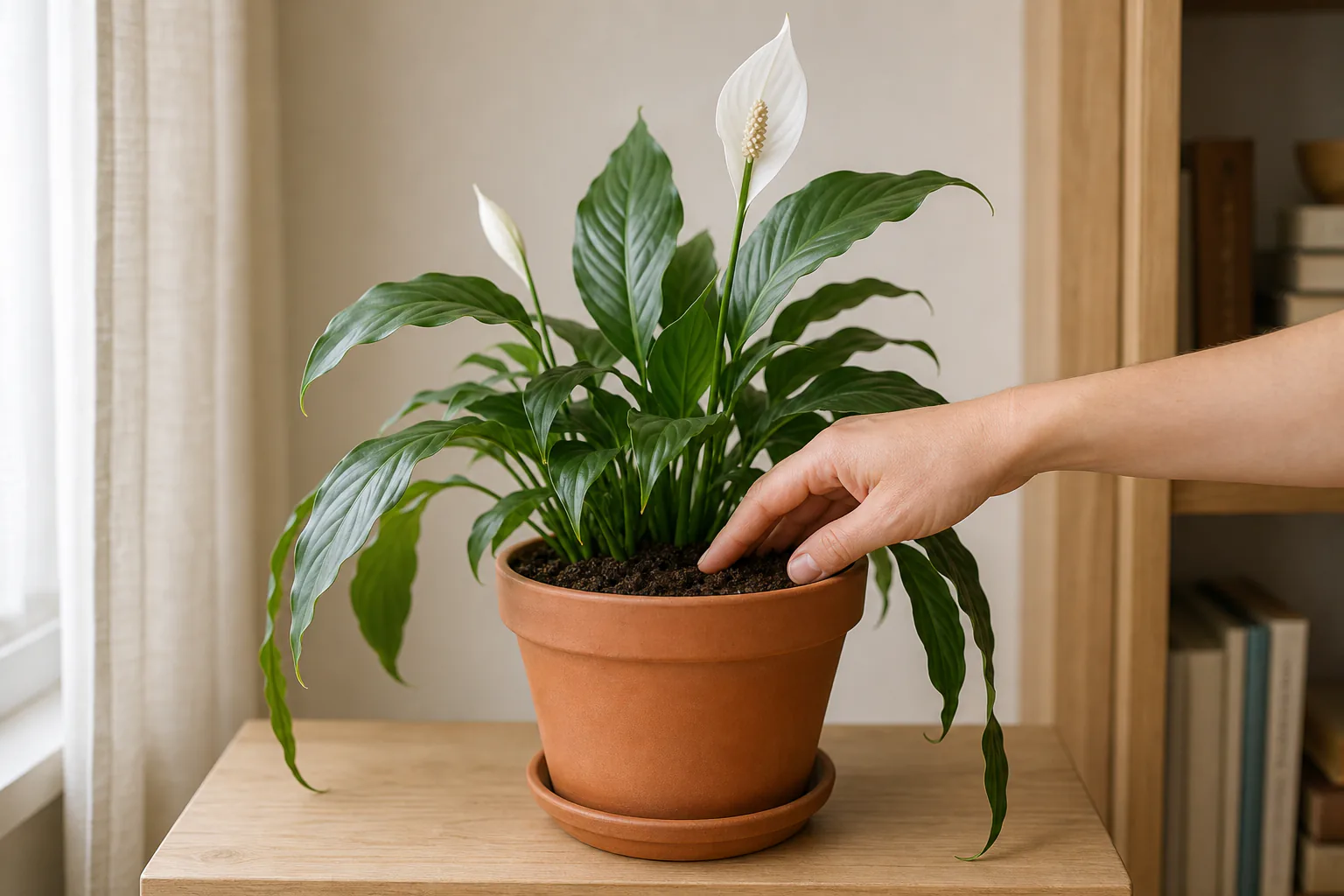
Feel the soil. Push a finger an inch or two into the mix. If it feels dry and crumbly at that depth, the plant is telling you it is thirsty. If it feels cool and damp, it is not, and adding more water is the wrong move.
Lift the pot. A dry peat-based mix is noticeably lighter than a wet one. Get a feel for the pot’s weight right after a thorough watering, and again a few days later. The change in weight is one of the most reliable moisture signals available, and it is free.
Look at the drainage hole if you can. If you can tip the pot slightly or peek through the bottom, pale, firm roots are a good sign. Dark, mushy, or sour-smelling roots are not.
Note recent light and temperature. Has the plant been moved? Has the weather turned? Has an AC vent been redirected toward it? Peace lilies prefer daytime temperatures around 68 to 85°F (Missouri Botanical Garden), and extended exposure below about 40°F can damage leaves, stems, and roots.
Smell the pot. A healthy, moist peat mix smells earthy. A mix that has been wet too long can take on a sour, stagnant, or vaguely rotten smell. That odor is a signal, not a verdict, but it tilts the picture toward overwatering-related root stress.
If the soil is dry and the pot is light, water thoroughly and watch. If the soil is wet and the plant stays floppy, hold off and read on.
Dry-soil droop versus soggy-soil droop: how to tell them apart
These two presentations look the same from across the room. Up close they behave very differently.
Dry-soil droop usually comes with:
- dry mix an inch or two down
- a noticeably light pot
- leaves that are limp but still green and firm in the stems
- recovery, typically within hours, after a thorough soak that drains freely from the bottom
Soggy-soil droop usually comes with:
- cool, damp mix well below the surface, days after watering
- a pot that still feels heavy
- leaves that remain limp, sometimes leaning outward as if pressed down in the middle
- little or no recovery after watering, and often a sour smell from the mix
- marginal browning or yellowing along the leaf edges
BBC Gardeners’ World specifically describes persistent drooping or outward-leaning leaves as a possible sign of root rot, the catch-all term for what happens when roots sit in saturated soil long enough to lose function. The same source suggests letting the top third of the soil dry out before rewatering, a useful benchmark for bright to medium indirect light; in lower light that interval stretches, in brighter spots it shortens.
The recovery behavior is the deciding factor. A peace lily that perks up after a soak was thirsty. A peace lily that stays limp in wet soil is signaling a different problem, and adding more water usually deepens it.
Light, temperature, and how fast the pot actually dries
Two peace lilies in the same home can need water on completely different schedules, and light is usually the reason.
University extension publications consistently describe peace lily light as bright and indirect, with no direct sun. UF/IFAS recommends bright, indirect light and warns against letting the plant sit in water. Clemson HGIC says peace lilies tolerate low light but grow best in bright indirect light, and that direct sun will scorch the leaves. SDSU Extension repeats the bright, indirect recommendation and adds that a well-drained potting mix and room-temperature water suit the plant well.
What this means in practice: a peace lily near a bright east-facing window will dry down faster than the same plant on a north-facing interior shelf. Both can be healthy, but the watering check has to match the light. If you move the plant from a brighter spot to a darker one and keep watering on the old schedule, you will eventually overwater it. The reverse is also true: a plant that has been slowly drying out in low light will need a more attentive schedule if you place it somewhere brighter.
Temperature moderates the same picture. Missouri Botanical Garden places the comfortable daytime range at 68 to 85°F, notes that growth slows between about 55 and 40°F, and flags extended periods below 40°F as damaging to leaves, stems, and roots. In winter, a peace lily on a windowsill above a cold draft can droop without any watering cause at all; warming the plant usually brings it back.
If you want a more complete way to read the light in any room before placing a plant, start with how to read the natural light in your room. The categories there translate directly into the dry-down speed you should expect from a peace lily.
Other leaf cues that travel with droop
Droop almost never arrives alone. Reading the companions tightens the diagnosis.
Brown leaf tips are most often a watering-stress signal. Several horticultural guides pair wilting, drooping, or yellowing with brown tips as common signs of underwatering. Overwatering produces a similar look: when roots are damaged, they fail to deliver water evenly, and the leaf edges and tips are the first to brown. Either way, brown tips point to a moisture problem more often than to a disease, and the soil check is what tells you which kind.
Yellowing pattern matters. A single yellow leaf at the base of the plant is often normal senescence and not worth changing anything over. Widespread yellowing with soggy soil leans toward overwatering. Yellowing on dry, light soil leans toward underwatering.
Leaf curl is usually a stress response. New leaves that curl under often point to dry air or watering stress; leaves that curl and stay small after a move can point to light that has changed abruptly.
None of these companion signals are diagnoses on their own. They are pieces of a pattern that the soil check has to confirm.
When droop keeps coming back: roots, pot size, and potting mix
If a peace lily droops, recovers after watering, droops again within a day or two, and repeats that cycle, the mix is probably drying too fast for the roots. If it droops, stays limp despite wet soil, droops again after you water it anyway, and the smell turns sour, the roots are probably struggling.
Three things to look at, in this order.
Pot weight over time. If the pot feels feather-light the day after a soak, the mix has pulled away from the sides or the peat has gone hydrophobic, and water is running straight through without being absorbed. Setting the pot in a tray of room-temperature water until the surface of the mix feels moist can rehydrate it. After that, return to top-watering so excess salts flush out the bottom.
Pot size. A pot that is much larger than the root ball holds more moisture than the roots can use, which is one of the fastest routes to soggy-soil droop. Peace lilies do not mind being a little snug; a slightly tight pot dries more evenly.
Roots, only if the pattern repeats. Unpotting a healthy plant because it droops once is overkill. But if soggy-soil droop keeps coming back, slide the plant out and look. Pale, firm roots are healthy. Brown, mushy, or hollow roots, or roots that pull away easily, suggest the mix has stayed wet too long. At that point, removing the loose, soggy mix, trimming any soft or hollow roots, and repotting into a fresh, well-drained mix are reasonable next steps based on what you find. SDSU Extension’s recommendation of a well-drained potting mix is the relevant guidance here.
Seasonal shifts: how peace lily care changes across the year
Spring and summer bring longer days, brighter windows, and faster dry-down. Watering checks become more frequent, and peace lilies are more likely to push out their white spathes when light is good.
Fall and winter bring shorter days, weaker light, and slower dry-down. The same plant may need water half as often as it did in midsummer. Cold windows and AC vents become real risks for temperature-related droop, separate from any watering issue. The inspection routine does not change with the season, but the answers do. A pot that felt light every five days in June might feel heavy for ten days in January.
A short droop-response checklist
When the leaves go limp:
- Feel the soil a finger-width or two down. Dry and crumbly means thirsty. Cool and damp means wait.
- Lift the pot. Light means dry. Heavy means still wet.
- Smell the mix. Earthy is normal. Sour or stagnant is a warning.
- Note the light and temperature. Has anything changed in the last few days?
- If the soil is dry, water thoroughly until it drains from the bottom, then watch for recovery.
- If the soil is wet and the plant does not recover within hours, stop watering and look at the pot, the drainage, and the roots if you can.
- Adjust placement before adjusting the watering can. Light is the variable most often behind repeat droop.
Droop is the plant’s loudest signal. The calmest response is to read the rest of the picture before acting on it.
Sources
- University of Florida IFAS Extension, Florida foliage house plant care: Spathiphyllum
- Clemson University Home & Garden Information Center, Peace lily
- South Dakota State University Extension, Peace lily: houseplant how-to
- Missouri Botanical Garden, Spathiphyllum
- BBC Gardeners’ World, How to care for a peace lily