Plant care
Terracotta vs plastic pots for houseplants: a behavior-led comparison
· Updated
Should you pot your houseplant in unglazed terracotta or in plastic? The honest answer is that neither material is universally better. The right choice depends on what the plant actually needs and how you actually water.
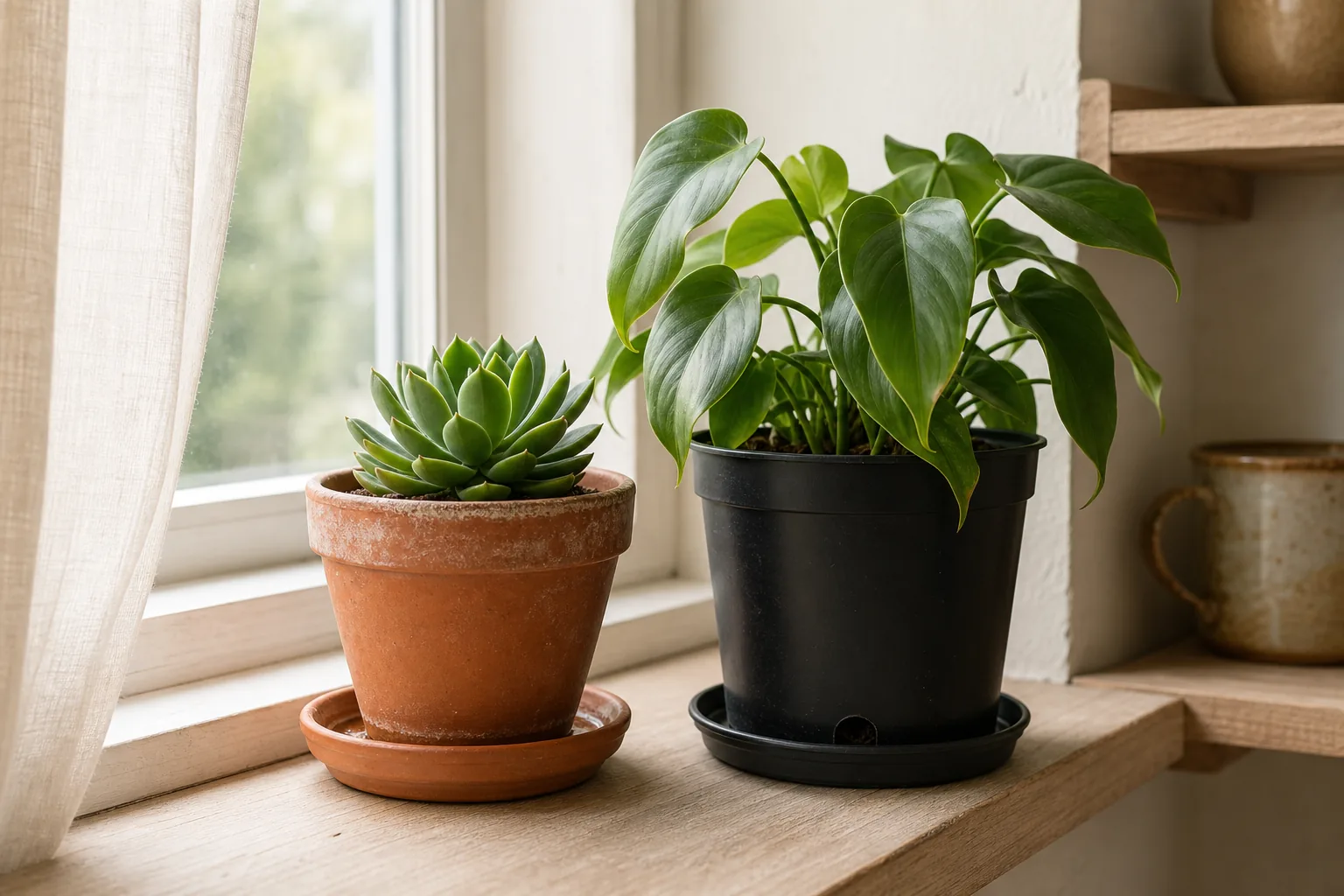
Unglazed terracotta is porous. The walls wick moisture out into the air, so the soil dries faster than it would in a non-porous pot of the same size with the same mix. Plastic is non-porous. Water leaves mostly through the soil surface and the drainage hole, and the soil stays wet longer. From there, the comparison becomes a fit question: which behavior matches the plant in your room, with your watering rhythm, in the light it actually gets.
This article walks through what each material physically does in a real indoor space, then matches that behavior to a plant’s moisture needs and to a reader’s routine. There is no universal winner here, only better and worse fits.
Why pot material changes how a houseplant behaves
A pot is more than a container. It is part of the moisture system a houseplant sits in, alongside the potting mix, the drainage hole, the light, the room humidity, and your watering rhythm. Material matters because it changes how fast water leaves the root zone between waterings.
Several extension services, including NC State and the University of Nebraska Lincoln, note that porous containers lose moisture more quickly than non-porous ones, and that plants in porous pots need more frequent watering than the same plants in plastic or glazed containers. That single physical property, porosity, drives most of the trade-offs in this comparison.
How unglazed terracotta works in a real room
Unglazed terracotta is fired clay without a glaze on the inside or outside. The body of the pot stays porous, which means air can move into the soil through the wall and water can move out.
In practice, that looks like this:
- The soil in a terracotta pot usually dries noticeably faster than the same soil in a plastic pot of the same size, in the same room, with the same watering amount. The exact difference depends on pot size, the mix, the light the plant sits in, and the room’s humidity, so it is best read as a behavior rather than a fixed ratio.
- The pot itself tends to feel lighter well before the same plant in plastic would, because water has left through the wall as well as the surface.
- In a warm, bright window, dry-down can be even faster, especially in low indoor humidity. Reading the natural light in your room helps you predict this.
- The outer wall often develops a pale crust where minerals carried by tap water are deposited as water evaporates through the clay. That crust is mostly cosmetic and not a sign that the pot is harming the plant. For more on what those white marks mean, see our guide on white crust on houseplant soil.
- Clay pots have thick walls that buffer roots against rapid temperature swings better than thin plastic does.
How plastic pots work in a real room
Standard plastic nursery pots have thinner walls and a non-porous body. Water leaves mostly through the soil surface and the drainage hole.
In practice, that looks like this:
- The soil stays moist longer, which suits plants that prefer even moisture.
- The pot stays roughly the same weight for days after watering, because the wall is not giving up water.
- In a cool, low-light room, dry-down can be slow enough that overwatering becomes a real risk for species that prefer a quick dry. Our overwatered versus underwatered checks are useful here.
- Plastic does not develop the pale mineral crust on its outside the way terracotta does, but salts can still build up in the soil over time.
University of Nebraska Lincoln Extension describes plastic as a good choice for moisture-loving plants in part because it does not have the wicking action that clay has.
Where glazed terracotta and other materials fit
Glazed terracotta is a different material from a moisture standpoint, even though it looks similar to unglazed clay. A glaze is a glass-based coating that seals the pore structure of the clay body. Water does not move through a glazed wall the way it moves through an unglazed one, so glazed terracotta behaves much more like plastic for dry-down purposes.
If you want the look of clay without the fast dry-down, a glazed pot is one option. Another is to keep the plant in a plastic nursery pot and drop it into a decorative cachepot, which keeps the moisture behavior predictable. The trade-offs of that setup are covered in our guide on drainage holes and cachepot setups.
Side-by-side: how the two materials compare on common concerns
- Dry-down time: unglazed terracotta dries faster; plastic holds moisture longer.
- Weight and stability: terracotta is heavier, which helps a tall floor plant stay upright; plastic is lighter and easier to move but tips more easily.
- Breakability: clay breaks if dropped; plastic tolerates drops and bumps.
- Visual cues: terracotta shows mineral crust on the outside wall as water evaporates; plastic does not, but both can develop surface algae in persistently damp conditions.
- Temperature buffering: clay’s thick walls moderate root-zone temperature swings better than thin plastic.
- Surface moisture: plastic does not weep through its sides, so it is easier to place on wood furniture without a saucer catching drips.
- Cost: standard plastic nursery pots are inexpensive; unglazed terracotta typically costs more per pot.
The shape of the comparison is consistent across extension publications. The choice is about fit, not about which material is “better” in the abstract.
When terracotta is usually the better fit
The clearest case for unglazed terracotta in an indoor collection is plants that prefer a quick dry-down. Brooklyn Botanic Garden recommends clay pots for cacti and succulents because the porosity lets soil dry out faster and gives roots air circulation. These plants need only modest water but plenty of light, which often comes with heat that speeds dry-down further.
Common fits include:
- Cacti and most succulents (echeveria, haworthia, jade, aloe)
- Snake plant and ZZ plant
- Many herbs grown on a sunny windowsill
- Any plant that has been showing signs of staying wet too long in plastic
For the species-level case, our indoor succulent care on a sunny window walks through the routine in more detail.
The practical effect is that terracotta gives you a built-in margin against overwatering for these species, in exchange for watering a little more often.
When plastic is usually the better fit
The clearest case for plastic is plants that prefer consistent moisture and people who water less often. In dry indoor air especially, moisture-loving plants in unglazed terracotta can dry out faster than the plant can comfortably tolerate.
Common fits, based on moisture preference rather than a one-size rule:
- Calathea and prayer plant (see calathea and prayer plant care for the full routine)
- Most ferns
- Peace lily
- Pothos, philodendron, and other tropical foliage when the room is dry
If you want the heavier, more stable look of clay without the fast dry-down, a plastic pot inside a clay cachepot gives you both.
Common myths to clear up before you choose
A few claims show up often enough to address directly.
Terracotta prevents root rot. It does not. It reduces how long the root zone stays saturated, but it does not replace proper watering, a drainage hole, or an appropriate mix. A succulent in terracotta with no drainage and daily watering will still rot.
Plastic is bad for plants. Plastic is a fit for moisture-loving plants and infrequent waterers. It is a tool, not a problem.
All clay pots are porous. Glazed clay is not meaningfully porous. Only unglazed terracotta breathes.
White crust on the outside of the pot is harming the plant. The crust on the outside wall is mostly cosmetic. The serious version of this problem is salt and mineral buildup in the soil, which the University of Maryland Extension describes as something that can cause desiccation or burning of plant tissues if it becomes severe. The two are not the same thing, and the inside-soil version is the one to watch.
A bigger terracotta pot is always safer because it breathes more. Bigger pots hold more water and dry more slowly regardless of material. Sizing up is a separate decision from material, and our guide on deciding when to repot covers how to tell whether the plant actually needs a larger pot.
What to watch for once you start using each material
With unglazed terracotta:
- The outer wall develops a mineral ring or crust. This is normal and mostly cosmetic.
- In a warm bright window, the soil can dry in a day or two. Be ready to water more often than you would in plastic.
- The pot is heavy. Floor plants benefit; high shelves and hanging setups are riskier.
With plastic:
- The soil can stay wet for many days, especially in a cool low-light room. Watch for signs of overwatering.
- Salt buildup is invisible on the outside but can accumulate in the soil. Periodic flushing with plain water, when salts start to accumulate, is a standard remedy.
- The pot is light. Anchor tall plants or use a heavier cachepot.
Switching pot materials: what changes in your routine
If you move a plant from plastic to unglazed terracotta, expect to water more often. Do not keep the old schedule. Lift the pot to feel its weight, or check the soil with a finger or wooden chopstick, and water when the top inch or two is dry for the species in front of you. The habit of watering by feel and pot weight matters more with terracotta than with plastic, because the dry-down is faster and less forgiving of a fixed schedule.
If you move from terracotta to plastic, the opposite adjustment applies. The same plant will need water less often, and the risk of overwatering goes up. Watch the leaves for the usual signs and adjust before changing anything else.
A short checklist to pick the right material for your plant
Run through these in order:
- Does this species prefer a quick dry-down (succulents, cacti, snake plant, ZZ)? Unglazed terracotta is usually a good fit.
- Does this species prefer consistent moisture (calathea, ferns, peace lily, most tropicals)? Plastic, or a plastic liner inside a decorative cachepot, is usually a better fit.
- Is the plant going in a warm, bright window? Expect faster dry-down in either material; terracotta will be especially fast.
- Is the plant going in a cool, low-light room? Expect slower dry-down in either material; plastic will be especially slow, and overwatering risk rises.
- Are you a frequent waterer or someone who forgets for a week or more? Match the material to that rhythm, not the other way around.
- Is the plant tall and top-heavy? Terracotta adds stability; plastic alone may need a heavier cachepot.
- Is the spot high up, in a hanging planter, or in a home with pets or children who knock things over? Plastic is more forgiving.
If two answers pull in different directions, trust the plant’s moisture needs first, your watering rhythm second, and the spot third. Material is one variable among several, and the right pot is the one that lets you read the plant and the soil clearly.
Sources
- Plants Grown in Containers - NC State Extension
- Choosing Clay or Plastic Pots for Plants - University of Nebraska Lincoln Extension
- Choosing a Container for Houseplants - University of Nebraska Lincoln Extension
- Cacti and Other Succulents as Houseplants - Brooklyn Botanic Garden
- Mineral and Fertilizer Salt Deposits on Indoor Plants - University of Maryland Extension