Plant care
Cast iron plant care indoors: what realistic growth actually looks like
· Updated
A cast iron plant tolerates low light, dry air, cool rooms, and irregular watering within limits. It still grows best in steady, bright indirect light, in an airy well-drained mix, on a dry-down watering rhythm read from pot weight and soil feel. New leaves are slow, often only a few per year on a young plant, and that pace is normal rather than a sign of failure.
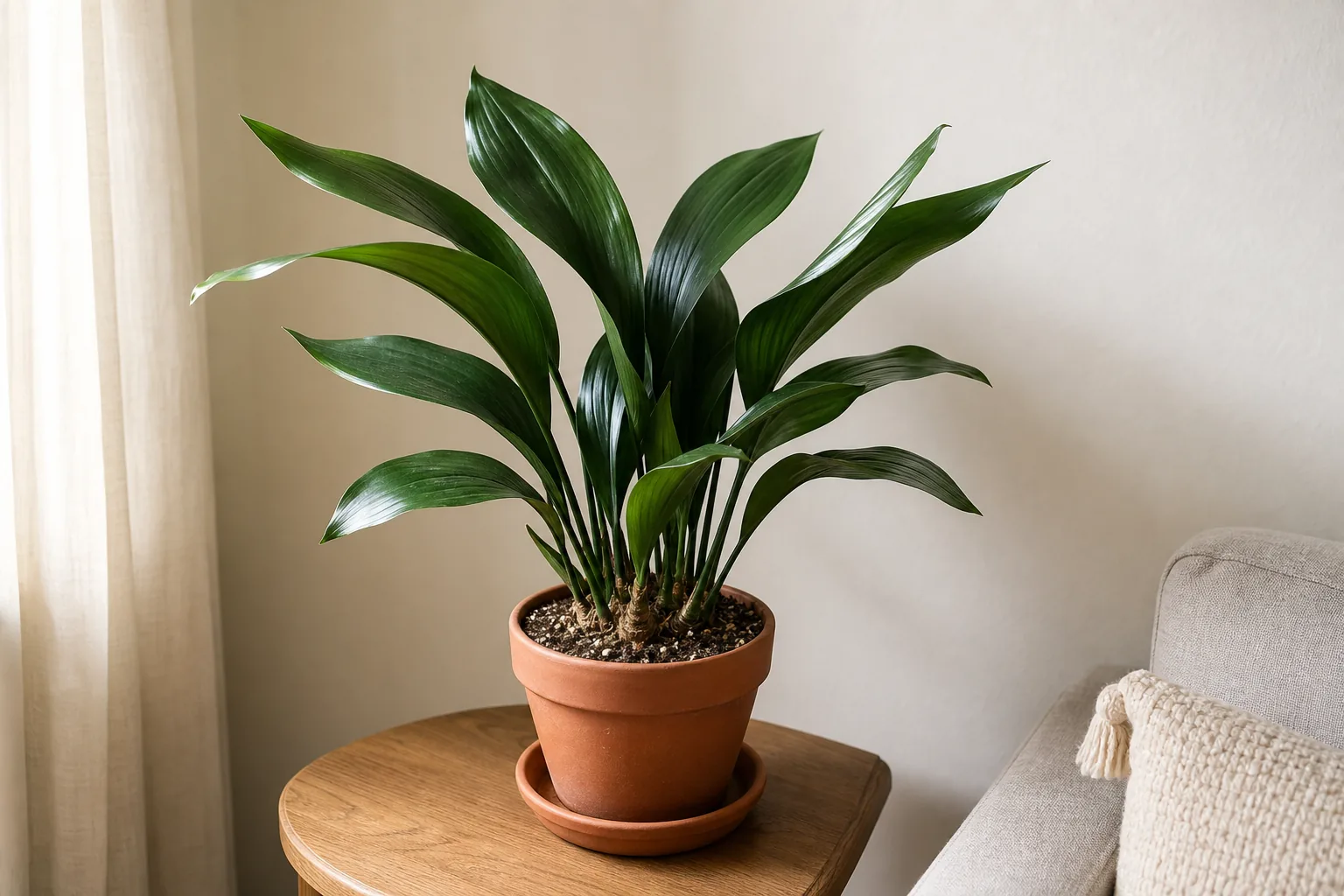
Aspidistra elatior is the species most houseplant gardeners mean when they say “cast iron plant.” It is a rhizomatous, clumping foliage plant native to East Asia, with dark green, glossy, lance-shaped leaves that emerge directly from rhizome tips at or just below the soil line. Mature foliage typically reaches one to three feet tall indoors depending on cultivar and conditions. The plant earns its common name by surviving conditions that weaken other species, dim corners, dry winter air, missed waterings, and cool rooms, but tolerant is not the same as thrives, and there are real failure modes worth knowing before you buy or repot.
This article walks through how to keep an Aspidistra alive and steadily producing new leaves by matching light, water, mix, pot size, temperature, and feeding to what the plant actually does in a real room. If you want the short version first, the core answer is that the brightest low or medium light spot in your home, an airy mix, and a hand-on-the-pot watering rhythm will outperform every other adjustment.
What “cast iron plant” actually means indoors
The “cast iron” reputation comes from the plant’s tolerance, not its appetite. In extension and botanical garden fact sheets, Aspidistra is described as tolerant of low light, dry air, cool rooms, and a wide range of soil types, with moderate drought tolerance once established. It is not described as immune to anything. The plant has clear preferences inside that tolerance: steady, bright indirect light produces the most new leaves, the soil is allowed to dry down between waterings, and the pot is slightly snug rather than oversized.
Two practical consequences follow. First, “anywhere in the dim corner” is not a placement strategy; it is a survival strategy. The plant will live there, but new leaf production slows further. Second, “tolerant” still includes the things that kill cast iron plants: chronic overwatering, compacted or peat-heavy mix, prolonged contact with freezing window glass, hot dry heating vents, and mineral or salt buildup that shows up as leaf-tip browning. Tap-water fluoride and chloride can contribute alongside fertilizer salts and low humidity, so it helps to change one variable at a time before deciding the cause.
For a fuller grounding in what low-light-tolerant houseplants can and cannot do, see the realistic expectations for low-light houseplants guide.
How to tell it is a real cast iron plant, not snake plant or ZZ
Aspidistra is easy to confuse with snake plant (Dracaena trifasciata) and ZZ plant (Zamioculcas zamiifolia) on a crowded shop shelf. All three are sold as low-light tolerant, rhizomatous foliage plants, but they fail in different ways and want different watering rhythms.
Cast iron plant has broad, glossy, dark green leaves with smooth edges, attached by a short petiole directly to a creeping rhizome at the soil line. Snake plant has stiff, spear-shaped, often vertically banded leaves that grow vertically from the rhizome. ZZ plant has thick, waxy, pinnate compound leaves arranged along upright stems, with water stored in potato-like rhizomes below the soil. If the leaves are simple, smooth-edged, and emerging one at a time from the soil rather than from a tall stem or spear, it is almost certainly Aspidistra.
This matters because the watering rhythm is different. Snake plant and ZZ both tolerate a deeper dry-down than cast iron plant does. Treating Aspidistra like a ZZ and letting the pot go bone-dry for long stretches, especially in brighter light, will tip the plant into stress even though the same routine would suit the ZZ on the next shelf.
Light: bright shade is better than deep shade if you want new leaves
Extension sources are consistent on the light range. Clemson HGIC recommends a north-facing window or a low-light area away from a window. NC State describes partial to full shade as the plant’s preference and notes intolerance of direct sun. UF/IFAS warns that too much sunlight causes leaf burn. Missouri Botanical Garden says bright indirect light is best, with full shade tolerated. The practical reading is that bright indirect light gives the most new leaves, deep shade keeps the plant alive but slows it further, and direct sun is damaging.
In a real room, this usually means a north-facing window, a spot a few feet back from an east-facing window, or the brightest low or medium indirect light you have. An interior hallway with no direct window light is the deep end of the range; the plant will live there but expect very slow growth. If you want a steadier pace of new leaves and are willing to learn what your light actually does, the natural-light reading guide is worth a read before you commit to a placement.
Move the plant gradually if you are upgrading its light. A week or two of incremental steps lets older leaves adjust without bleaching or crisping at the tips, similar to acclimating a new houseplant after a shop purchase.
Watering: dry down between waterings, do not keep the rhizomes damp
Missouri Botanical Garden recommends watering regularly from spring to fall and reducing watering in winter when growth slows. The pattern that fits Aspidistra best is to let the top half to two-thirds of the mix dry, then water thoroughly until water runs from the drainage hole. The rhizome sits at or just below the soil line, so a mix that stays wet at that depth for long stretches is the path to rot.
In practice, the most reliable signal is pot weight. Lift the pot right after a thorough watering to learn what wet feels like, then check again a week later. When the pot feels noticeably lighter and the top inch or two of mix is dry to the touch, it is time to water again. The in-depth watering by feel and pot weight approach works well here because a slow-growing rhizomatous plant does not reward a strict schedule.
In winter, water less. Growth slows, light is lower, and the rhizome uses less. If the pot is still heavy a week and a half after watering, hold off longer rather than watering on habit.
Potting mix and pot choice: airy, well-drained, slightly snug
Aspidistra wants a well-drained potting mix. NC State calls for rich, well-drained soil in the landscape; for a houseplant, that translates to an airy blend rather than a dense, peat-heavy one. Bark, perlite, and a modest amount of peat or coco coir keep air space around the rhizome and let the mix dry on the rhythm described above. Cornell’s greenhouse media notes that texture and structure affect air porosity and water retention, which is the same point the mix guide for houseplants makes in longer form.
On pot size, cast iron plant prefers to be slightly snug. Jumping up two pot sizes at once keeps the deeper, unused mix wet for long stretches and pulls the rhizome line down into a moister zone. A pot that is one size up from the current root mass, with a drainage hole, is the safer move. If you use a decorative cachepot with no drainage, keep the plant in its nursery pot and lift it out to water, then let it drain before it goes back in. The drainage and pot setup guide goes deeper into this trade-off.
Temperature, drafts, and humidity: tolerant within a real range
Mississippi State Extension puts the comfortable range for Aspidistra at 59 to 86°F (15 to 30°C), with established outdoor plants surviving heavy frosts in U.S. zones 7 to 11. Indoors, the typical room sits comfortably inside that range. The failure cases are usually local rather than ambient: a pot pressed against a freezing windowpane in January, or sitting on a shelf directly above a hot dry radiator. The drafts, vents, and cold window glass guide covers the placement details that matter most in winter.
Indoor humidity between roughly 30% and 50% is fine. The plant does not need a humidifier, and misting is not particularly useful for a slow-growing rhizome plant with broad, smooth leaves. What matters more is keeping the pot out of the path of cold drafts from old windows and away from direct heat blasts from floor vents. Both extremes show up as leaf-tip browning and, in the case of prolonged cold contact, as mushy patches on the leaf bases.
Fertilizer: light, infrequent, and easy to overdo
Aspidistra is a light feeder. A dilute, balanced fertilizer applied sparingly during the spring and summer growing season is plenty. A common approach is a half-strength dose at most every few weeks, but a slow grower like this does not need much, and skipping fertilizer when growth has slowed is reasonable. For a fuller grounding in how little is usually enough, see the houseplant fertilizer basics guide.
Salt buildup in the mix is one possible contributor to leaf-tip browning, so flushing the pot with plain water every few months and skipping fertilizer when the plant is not actively pushing new leaves are both reasonable habits. If you have hard tap water with notable fluoride or chloride, that is one possible explanation for persistent tip browning, but it is not the only one. Underwatering, low humidity, fertilizer salt buildup, and old leaf senescence all do the same thing. Change one variable at a time and watch for a few weeks before deciding the cause.
Repotting and dividing: only when the rhizomes actually need it
Repotting signals beat repotting schedules for this species. Repot when rhizomes push the plant up out of the pot, when water runs straight through without wetting the mix, or when the clump visibly cracks the container. For most indoor Aspidistras, this is every three to five years rather than annually. The deciding when to repot guide walks through the same signals in more detail.
When you do repot, step up only one pot size. For division, wait until spring, lift the clump, and separate it so each division has at least two to three healthy rhizome segments with leaves attached. Divisions without leaves are slow to establish and may sit for months before pushing their first new leaf.
What realistic growth looks like: a few new leaves a year is normal
Mississippi State Extension notes that young plants may produce only two leaves per year, and that after several seasons, as the rhizome clumps continue to grow, they will make many more. No extension source in the published fact sheets guarantees a specific indoor leaf count per year, and growth rate depends on light, pot size, season, and clump age.
The single most useful reframing is this: a cast iron plant that puts out a few new leaves in a year is doing fine. A single leaf may persist for several seasons, so the absence of new growth is not, by itself, a failure signal. If you have not seen new leaves in a year, the first things to check are light level and season, then pot size and root binding, then watering rhythm and mix drainage.
Common problems on cast iron plants and how to read them
Yellow leaves usually mean the rhizome or roots have been sitting wet. Check pot weight, drainage, and whether the cachepot is holding standing water at the bottom. Brown, crispy leaf tips can come from underwatering, low humidity, hot dry air from a vent, or salt and mineral buildup in the mix or tap water. A single yellowing older leaf at the base is normal senescence rather than a problem.
Pests are uncommon but possible. Cast iron plant is generally pest-resistant, though the issues houseplant gardeners most often report when they do appear are scale or mealybug along the leaf bases and petioles, especially on plants kept in dry indoor air or plants that have spent the summer outdoors. If you see raised bumps, sticky residue, or cottony tufts, isolate the plant and ask a local nursery or your regional extension office for an identification before treating.
For pet households, do not rely on this article for a safety ruling. Aspidistra is widely treated as non-toxic in houseplant references, but the underlying toxicology for your specific pet and situation should come from a verified source such as the ASPCA, the Pet Poison Helpline, or your veterinarian.
When to ask a local nursery or extension office for help
If the rhizome is mushy, the plant has dropped several leaves in a short window, you cannot identify a pest, or the leaves have unusual spotting or distortion that does not match the patterns above, it is reasonable to bring a photo or a sample to a local independent nursery or your regional university extension office. They can see your specific room, water, and plant, which is more useful than any single online care guide.
Sources
- Clemson University Home & Garden Information Center — Cast iron plant: https://hgic.clemson.edu/cast-iron-plant/
- NC State University Plant Toolbox — Aspidistra elatior: https://plants.ces.ncsu.edu/plants/aspidistra-elatior/
- Mississippi State University Extension — Aspidistra (Aspidistra elatior) for the farmer florist: https://extension.msstate.edu/publications/aspidistra-aspidistra-elatior-for-the-farmer-florist
- Mississippi State University Extension — Aspidistra elatior (PDF, P4138): https://extension.msstate.edu/sites/default/files/document/2025-11/P4138_web.pdf
- Missouri Botanical Garden Plant Finder — Aspidistra elatior: https://www.missouribotanicalgarden.org/PlantFinder/PlantFinderDetails.aspx?taxonid=282290
- University of Florida IFAS Extension — Aspidistra spp.: Cast iron plant (FPS53): https://ask.ifas.ufl.edu/publication/FP053