Plant care
Mushy succulent leaves: a calm, ordered inspection before you water or repot
· Updated
Mushy succulent leaves usually mean one of two things: a healthy plant quietly reabsorbing an older lower leaf, or a plant that has been sitting wet long enough for cells in the leaf to start breaking down. Which one you have decides whether you should water, repot, leave the plant alone, or escalate. Before doing any of those, run a short inspection that starts at the leaves and works outward to the soil, the pot, the stem, and only then the roots.
The short version
- If only a few older, bottom leaves are mushy, the rest of the plant looks firm, and the soil is dry, you are usually looking at normal reabsorption. Let the leaf dry and fall on its own and hold off on watering until the mix has dried through.
- If leaves anywhere on the plant feel water-soaked or jelly-like, the soil below the surface is still damp, and the stem near the base is firm and green, the plant has likely been overwatered. Do not water again until the mix is dry an inch or two down, and check the pot and saucer for trapped water.
- If mushy leaves are paired with a soft, discolored, or odorous stem base and damp soil, plan to unpot and inspect the roots before adding any more water.
Either way, mushy leaf tissue itself does not recover. New growth from the center or top of the plant is the honest signal that things are improving, and some leaves will be lost along the way.
Why healthy succulents reabsorb lower leaves
Healthy succulents regularly shed their oldest lower leaves, and the process tends to look the same every time. An older leaf gradually loses color, may turn yellow or pale, thins out, and finally dries to a papery or crisp texture before it detaches. The rest of the plant, especially the upper and newer leaves, stays plump and firm, and the soil is usually dry. This is a routine part of how succulents grow rather than a sign of trouble.
It is the same pattern that gets misread as a problem. A few thinning, drying bottom leaves on a firm, otherwise healthy plant is a cost of growing succulents, not a symptom. The fix is observation: leave the leaf alone until it comes off cleanly, and do not compensate by watering more, because this kind of leaf loss is not a sign of thirst. For a wider look at how mushy and wrinkled leaves compare across houseplants in general, the overwatered versus underwatered houseplants guide walks through the side-by-side signals.
How mushy leaves from overwatering actually feel and look
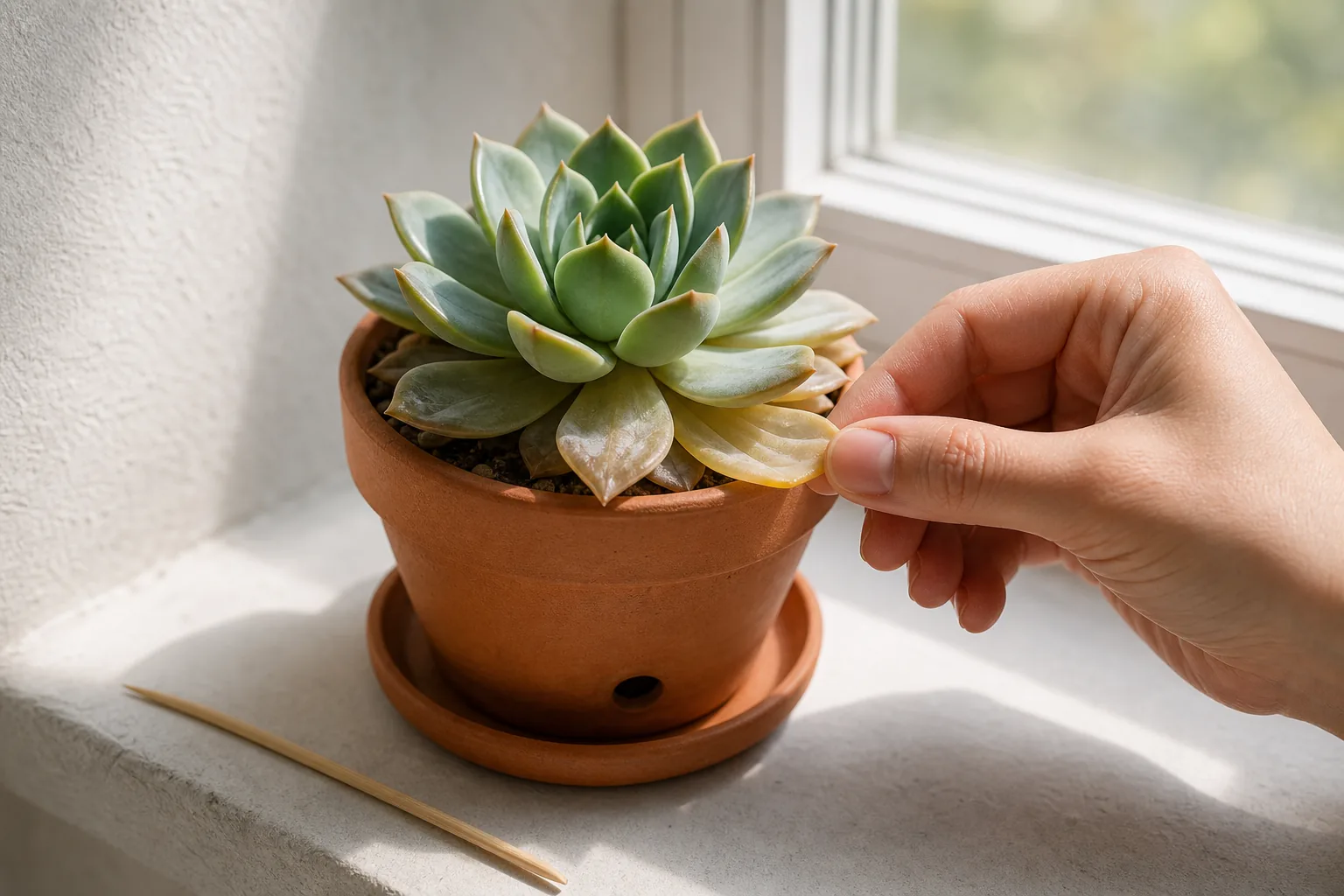
Overwatering damage on a succulent tends to read differently. The leaf often feels water-soaked, almost jelly-like, and may look translucent, pale, or yellowish rather than dry. It can appear on leaves that were recently plump, not just on the oldest ones. Pressing one gently between your fingers may leave the tissue feeling like it has more liquid inside than a healthy leaf, and in advanced cases the leaf can split or leak.
Where this comes from physically is worth knowing. When a succulent’s root zone stays wet for too long, two related things happen. Cells in the leaf can take up water faster than they can use or release it, and they rupture, leaving water-soaked or corky patches, a pattern that horticulturists call edema. And the roots themselves can sit long enough in saturated, oxygen-poor soil that their tissue starts to die, which is what people usually mean when they say root rot. The leaves above may stay soft or even wilt, not because the plant is thirsty, but because the damaged roots can no longer move water into them effectively.
A 60-second inspection: leaves, then soil, then pot, then stem, then roots
Run this in order and stop at whichever step gives you the answer you need.
Step 1, map the mushy leaves. Are they only the oldest leaves at the bottom of the rosette or stem, or are they scattered higher up? Lower-only, especially paired with drying rather than wetness, leans toward reabsorption. Mushiness higher on the plant, or mushiness anywhere paired with translucence, leans toward overwatering.
Step 2, feel the soil. Stick a finger, a chopstick, or a dry bamboo skewer an inch or two down into the mix. Cool, damp soil below the surface is a strong signal that the plant has not yet used the water it has. Dry all the way down is a different signal.
Step 3, lift the pot. A pot right after a thorough watering feels noticeably heavier than the same pot a few days later, assuming the mix can drain. Learn the two weights for your own plant. A pot that still feels heavy for the size of the plant is telling you the root zone is still wet.
Step 4, check the pot setup. Is there a drainage hole? Is there water sitting in a saucer or decorative cachepot underneath? Standing water under the pot keeps the root zone wet from below and is one of the most common causes of mushy leaves indoors. The drainage and pot setup guide goes deeper into how pot choice and saucer habits change how long a mix stays wet.
Step 5, press the stem near the base. A firm, green stem is a strong sign the plant is salvageable even when the leaves above it look rough. A stem that gives under gentle pressure, looks darkened, or has a noticeable smell is the point at which you stop observing and start planning to unpot and inspect the roots.
Step 6, unpot only if steps 1 to 5 point toward it. If you do unpot, healthy succulent roots are usually lighter colored and firmer; roots that have been kept wet long enough tend to be brown or black and may feel mushy or pull apart into strings. That last detail matters: roots that have already died do not bounce back just because watering improves afterwards.
Reading the soil and the pot before you add any water
The single most useful early decision is whether to add any water at all. If the mix is still cool and damp an inch down, the pot still feels heavy, and there is no sign of stem trouble, the answer is to wait. Succulents recover from being too wet by drying out, and adding more water on top of wet soil is what turns a reversible problem into a permanent one.
If the mix is fully dry and only a few lower leaves are mushy, you do not need to compensate with a large watering. A modest drink once the mix is dry through, followed by a return to observation, is more useful than a drench. For a longer look at observation-led watering rather than a fixed schedule, the watering a succulent without a fixed schedule guide walks through the same idea in more detail. The general indoor succulent care basics post can also help anchor mushy leaves inside a wider routine.
On pots and mix, treat these as responses to what you observed, not as rules. A fast-draining cactus and succulent mix in a pot with a drainage hole fits most indoor succulents in typical conditions. A standard peat-based houseplant mix in a large pot with no hole is the kind of setup mushy leaves tend to come from, especially in a dim room. If your inspection pointed at the pot or the mix as a likely contributor, those are fair things to change, but change them because you observed a problem, not because a list told you to. The choosing a potting mix guide can help if you want to compare what a succulent-friendly mix looks like.
When mushy leaves point to stem or root trouble
A few mushy lower leaves with a firm green stem and dry soil is a manageable situation. Mushy leaves paired with a soft or discolored stem base, or with a persistent damp or sour smell from the pot, is a different situation. At that point, plan to unpot so you can actually see the roots.
Once the plant is out of the pot, knock off loose mix and look at the roots. Anything that is brown or black and mushy is unlikely to recover and is usually trimmed back to firm, lighter-colored tissue with a clean, sharp tool before the plant is repotted into a dry, fresh mix. Any treatment choice beyond that, including any fungicide or home remedy, is best discussed with a local nursery or your regional extension service, and any product used should be applied according to its own label. The wet-soil wilting pattern, where a plant droops even though the soil is wet, is closely related and is covered in the wilting in wet soil guide.
What to do, and not do, before the next watering
Useful next steps
- Stop watering until the mix is dry an inch or two down and the pot has lost its post-watering weight.
- Empty any standing water from saucers and decorative cachepots, and move the plant somewhere with moving air while it dries.
- Improve light if the current spot is dim, since slower water use is part of why the mix stayed wet.
- If you unpot and find rotted roots, trim back to firm tissue and repot into a dry, fast-draining mix. Treat the plant gently and withhold water for a short period after repotting so cut root surfaces can heal.
Things that usually do more harm than good
- Watering “just in case” on top of damp soil.
- Switching to a fixed schedule after seeing mushy leaves, when the problem was duration of wetness, not frequency of watering.
- Treating all bottom-leaf loss as a problem and repotting a healthy plant that was simply reabsorbing.
- A common practical caution: leave mushy leaves in place until they dry on their own, since peeling wet, mushy tissue off a stressed plant can open small wounds in tissue that has not yet separated cleanly.
Realistic expectations: which leaves will not recover
Mushy leaf tissue does not firm up again. Once cell walls have ruptured and the tissue has broken down, that leaf is going to be shed, either by you or by the plant. The honest signal of recovery is new growth from the center or top of the plant, not whether the mushy leaves recover. Losing some leaves during this process is normal, and is not by itself a sign that you got the diagnosis wrong.
A useful mental model is to judge the plant by its firm tissue. As long as the stem is firm and green above the mushy area, and at least some leaves or offsets up top are still firm, the plant has living tissue to grow from. When the firm tissue is gone, recovery becomes much less likely, and that is a reasonable point to bring in a local expert who can look at the actual plant.
When to stop and ask a local nursery or extension office
If the inspection pointed to a serious stem or root problem and you are not comfortable trimming roots or repotting, or if a home remedy article is asking you to apply something you do not recognize, that is the point to pause and ask a local source. A nearby independent nursery, a master gardener program, or your regional cooperative extension office can look at actual pictures or a sample and give advice that fits your species, your pot, and your room. Any chemical treatment you do choose should be applied according to its own product label, and any home remedy you have read about online should be treated as something to verify rather than as a default step.
Sources
- Iowa State University Extension and Outreach, Yard and Garden: Common problems and issues of succulents
- NC State Extension, Extension Gardener Handbook: Plants grown in containers
- Royal Horticultural Society Advice: Oedema in plants