Plant care
English ivy indoors: matching the plant to an ordinary room
· Updated
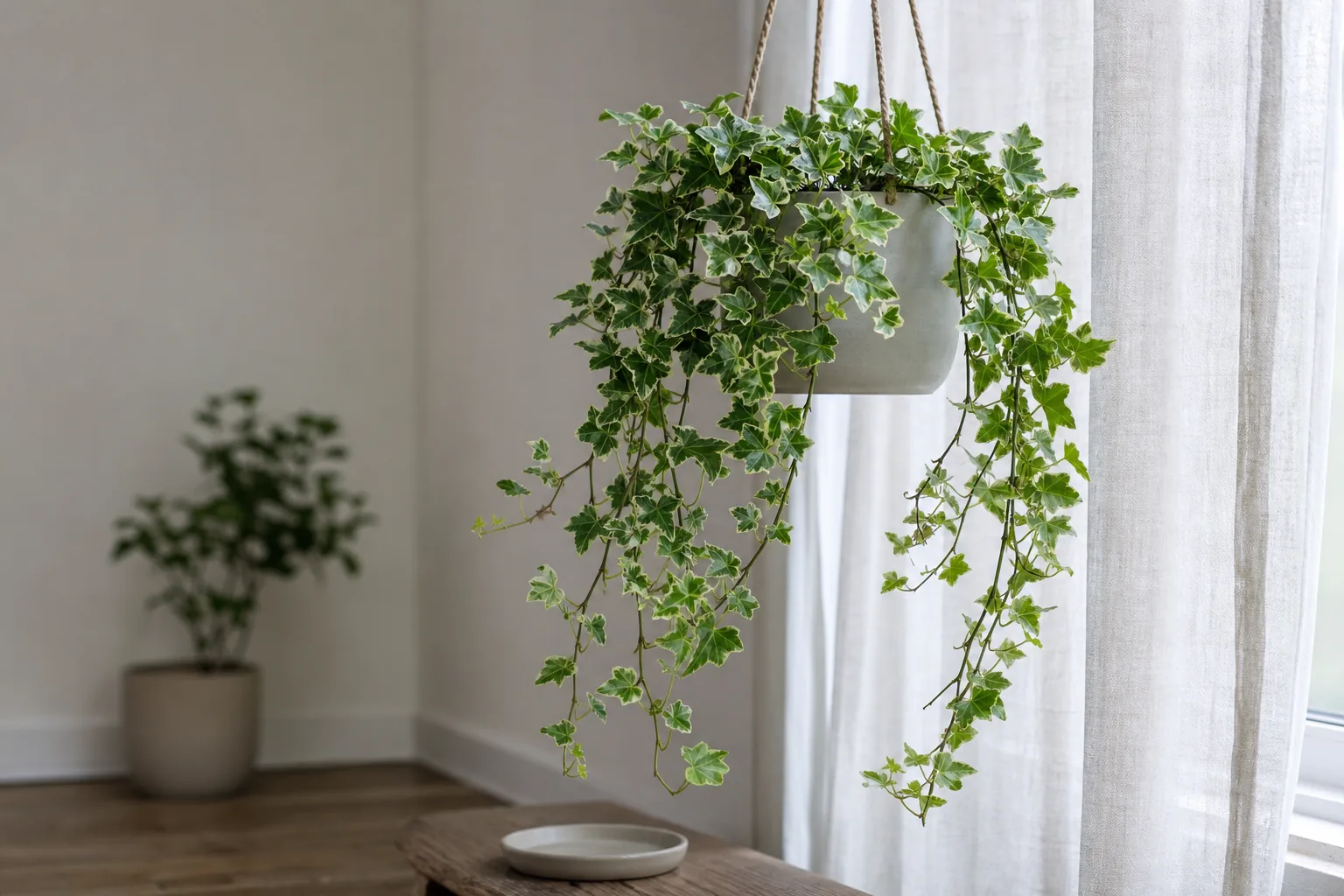
English ivy can grow indoors, but it is not the easy trailing plant it is often sold as. Clemson Extension describes it as a plant that wants bright indirect light (not low light), cool to moderate room temperatures around 50–70°F with a night drop, an airy well-drained mix, and humidity above what forced-air heating provides. When any of those slip, the first visible signal is almost always spider mites or mealybugs, not thirst. That is why a realistic ivy plan looks different from a pothos or philodendron plan: the inspection habit has to sit alongside the watering habit from day one.
This page walks through what English ivy actually needs indoors, what tends to go wrong, and how to tell whether your room is a reasonable match before you spend months caring for a struggling plant.
What English ivy actually is as a houseplant
English ivy (Hedera helix) is a vining evergreen grown indoors for its trailing habit, leaf shape, and variegated cultivars. It is sold in small nursery pots, hanging baskets, and topiaries, and is often grouped with pothos and heartleaf philodendron on retail shelves because all three are trailing foliage plants.
The similarity ends there. Pothos and philodendron are tropical plants that tolerate warm living rooms and brief drying between waterings. English ivy is a temperate plant from a different climate family, and indoor conditions that suit pothos year-round can stress ivy in a matter of weeks. The result is the same retail category, but a meaningfully different care plan.
Read your room before you place the ivy
Before deciding on a shelf, take ten minutes to actually look at the room the ivy will live in. Walk through three observations:
- Light at the proposed spot: how many hours of indirect light does it get, and is there any direct sun? Holding your hand a foot above the spot at midday is a quick way to estimate intensity.
- Air movement: is the spot near a heating vent, a cold window, or a frequently opened door? Is it crowded against a wall or other plants?
- Warmth and dryness: what is the room temperature at the thermostat, and does the spot sit in a hot or cold pocket?
These three questions matter more for ivy than for most trailing houseplants, because the plant’s first failure mode indoors is pest pressure shaped by its microclimate, not watering mistakes.
Light: bright indirect, not the low-light shelf
Clemson HGIC states that most cultivars of English ivy grow best in bright light but not direct sun. They tolerate low to medium light, but growth is reduced and variegated forms may revert to solid green. Costa Farms adds that ivy grown in low light indoors does not last as long.
In practice that means:
- A bright indirect spot near an east or west window, a few feet back from the glass, is where ivy grows fullest.
- A medium indirect spot several feet from a window is tolerated, but expect slower growth and watch for variegation fading.
- A low-light shelf, hallway, or interior corner is not a long-term home. The plant may survive for months but tends to thin out and show pest pressure more readily once it weakens.
The Spruce notes that some direct light in winter can benefit indoor ivy. If your only bright spot is a south window in winter, a few hours of weak winter sun through glass is usually fine; in summer the same exposure can scorch leaves. The framework for reading the natural light in your room gives you a more detailed way to place any plant, including ivy, in the spot that actually matches its needs.
Temperature and airflow: cooler and less stagnant than you think
Clemson HGIC gives 50 to 70°F during the day, about 5 to 10°F lower at night. That is a cooler and narrower range than most tropical houseplants want, and it conflicts with the way many living rooms are heated in winter.
Two practical implications:
- Place ivy away from heating vents, radiators, and the warm air that collects at the top of a sun-heated window. Heat and dryness at those spots drive spider mite pressure up quickly.
- Keep the plant where air actually moves a little, rather than in a still corner. Clemson notes that good air circulation helps ivies and that plants should not be crowded.
If the only available spots are near a drafty window or a vent, ivy will tell you within a few weeks by dropping leaves, browning at the tips, or showing early webbing. The fuller picture of how drafts, vents, and sun-heated glass affect placement lives in the drafts, vents, and sun-heated glass guide.
Watering: a real dry-down, then a thorough soak
Ivy declines fast in constantly wet soil, which is the most consistent watering-side failure mode across both extension and consumer sources. It also sulks when bone dry for long stretches. The middle path is a real dry-down between waterings, observed rather than scheduled.
A practical routine:
- Check the top inch of the mix with a finger. If it feels dry and the pot feels noticeably lighter when lifted, water thoroughly until it drains from the bottom.
- If the mix is still cool and damp, wait. Pothos and philodendron forgive an extra day; ivy shows stress sooner.
- Always empty the cachepot or saucer after watering so the roots are not sitting in standing water.
This is the same observation-first approach used across the watering by feel and pot weight guide. The reason it matters more for ivy is that the plant’s failure modes look similar from above: yellowing leaves can mean overwatering, root rot, or pest damage, so the watering plan and the inspection plan have to be designed together.
Potting mix and pot setup
Ivy wants an airy, well-drained mix that lets the root zone dry down evenly. Standard houseplant potting mixes vary widely; if the bag you have feels heavy and dense, adding perlite or coarse bark to loosen it up gives the roots more breathing room. A pot with a drainage hole is the safer choice, because ivy is less forgiving of a waterlogged base than pothos or philodendron. If you keep the plant in a decorative outer pot, treat the inner nursery pot as the one that actually does the watering work and never let the outer pot hold standing water.
Humidity in an ordinary home
None of the extension sources give a specific relative-humidity number for indoor English ivy, and none endorse misting as a primary tool. The qualitative framing that holds up is “above what forced-air heating provides,” which in a typical heated winter home means the plant will benefit from grouping with other plants, sitting away from the driest heat sources, or running a small humidifier nearby during the dry months.
Brown leaf tips and crisp edges in winter are usually a combination of low humidity and warm air from a vent, not thirst.
Pest vigilance: spider mites and mealybugs as a built-in habit
Clemson HGIC lists mealybugs, mites, aphids, whiteflies, and scales as the most common insect pests of ivies grown as houseplants. In indoor conditions, spider mites and mealybugs are the two that show up first and most often. Spider mites in particular thrive in the warm, dry air that a heated living room produces, and ivy is especially vulnerable to them indoors, often showing damage before any other houseplant in the same room.
The single highest-leverage habit is a short weekly inspection:
- Look at the undersides of leaves for fine webbing, tiny moving specks, or stippled discoloration.
- Check leaf axils and stem crotches for the small white cottony tufts that signal mealybugs.
- Notice any sticky residue on the pot rim or the shelf below the plant, which can be an early sign of aphids or scale before the leaves themselves look damaged.
For identification and a calm, layered response, the spider mites on houseplants guide is the primary reference, with the mealybugs on houseplants guide covering the second most common pest on indoor ivy. Folding the inspection into a simple weekly houseplant care routine is a good way to make it a recurring habit rather than an emergency response every time you walk by.
Pruning, shaping, and keeping the pot full
Clemson HGIC advises pinching or pruning stems to keep ivies bushy and to control growth. Stems that go leggy with widely spaced leaves are usually a low-light signal, not a watering signal; the right first move is often to relocate the plant to a brighter spot and then trim back to a leaf node to encourage branching.
Use clean, sharp scissors and cut just above a leaf node. New side shoots usually emerge from the next node down within a few weeks under good conditions.
Safety: ingestion risk for pets and people
English ivy is toxic if ingested. The fruit and leaves contain compounds associated with gastrointestinal distress, including nausea, vomiting, and diarrhea, in people and pets. This matters in any household with cats, dogs, or small children who might chew on trailing vines.
Placement is the simplest mitigation: a hanging basket, a high shelf out of reach, or a room the pets do not access. For severity and species confirmation, the pet-aware houseplant choices guide walks through how to verify toxicity using current reference sources rather than relying on social-media lists. If ingestion is suspected, contact a veterinarian, a local emergency resource, or poison control directly.
A short observation checklist for the first month
Use this as a once-a-week pass during the first four weeks with a new ivy:
- Light check: are leaves holding their color and variegation, or fading to green?
- Dry-down check: is the top inch of the mix dry before each watering?
- Drainage check: is the pot draining freely, and is the saucer empty?
- Air check: is the plant out of vent drafts and away from cold or hot window glass?
- Pest check: any webbing, cottony tufts, sticky residue, or stippled leaves?
- Shape check: any long, bare stems that need pinching back to a leaf node?
If several of these are lining up against the plant after the first month, the room is probably the wrong match rather than the care routine. Moving the ivy to a cooler, brighter, better-ventilated spot is usually a higher-leverage fix than adjusting the watering.
Sources
- Growing English Ivy Indoors — Clemson University Home & Garden Information Center
- English Ivy (Hedera helix): Identification and Control — University of Florida / IFAS Extension (PP339)
- Pothos as a Houseplant — Penn State Extension
- Plant Rx: 5 Tips for Raising English Ivy Indoors — Costa Farms
- English Ivy: Plant Care & Growing Guide — The Spruce
- Is English Ivy a Threat? — North Carolina Native Plant Society / Wildflower