Plant care
Cleaning and sanitizing pruning tools and pots between houseplants
· Updated
The short answer
Cleaning is a habit, not a cure. The first habit is mechanical: after each session, wipe visible sap and soil off pruners, scissors, stakes, ties, and reusable pots, then dry them. Disinfecting, which means reducing microbes to a safer level rather than eliminating them, is the next step, and it is worth doing when there is a known pest, a sick plant, or a repotting session that moves through many plants. University extension services commonly recommend three options for hard, non-porous surfaces: 70% isopropyl alcohol wiped or briefly dipped on clean blades, a 10% chlorine bleach solution (about 1 part household bleach to 9 parts water) used for short contact, or hot soapy water for routine sessions between healthy plants. True sterilization is rarely achieved at home, and that is fine for ordinary indoor plant care.
Why cleaning tools and pots between houseplants matters
Indoor plants live close together. The same hands that prune a sick plant are often the same hands that water a healthy one, and the same shears, scissors, or knife move from pot to pot across a session. Sap, soil, root debris, and small insects can hitch a ride on a blade or hide in the rim of a pot. Removing that material is the simplest way to lower the chance of carrying a problem to the next plant.
That said, cleaning alone will not solve an infestation. Sanitation is one layer of a response that also includes isolation, inspection, and treatment, which is how university IPM programs frame it for houseplants and greenhouses. Think of cleaning as a habit that makes every other step more effective, not as a fix on its own.
If you are isolating a new or sick plant, plan a quick tool cleaning when you move between it and the rest of your collection. Our guide on inspecting and quarantining a new houseplant walks through when to start that habit.
Three honest levels: cleaning, sanitizing, sterilizing
These words are often used loosely, so it helps to separate them before picking a method.
- Cleaning removes visible soil, sap, and debris. Warm water, a brush or cloth, and a little dish soap are enough.
- Sanitizing or disinfecting reduces microbes to a level considered safer. This is the level extension services target for routine plant care.
- Sterilizing eliminates all microbes. Home methods almost never reach this level, and they do not need to for indoor plants.
The aim of a home routine is to land squarely in the second category. If a method description claims to sterilize your shears at the kitchen sink, treat that claim with caution.
The routine that lowers most transfer risk
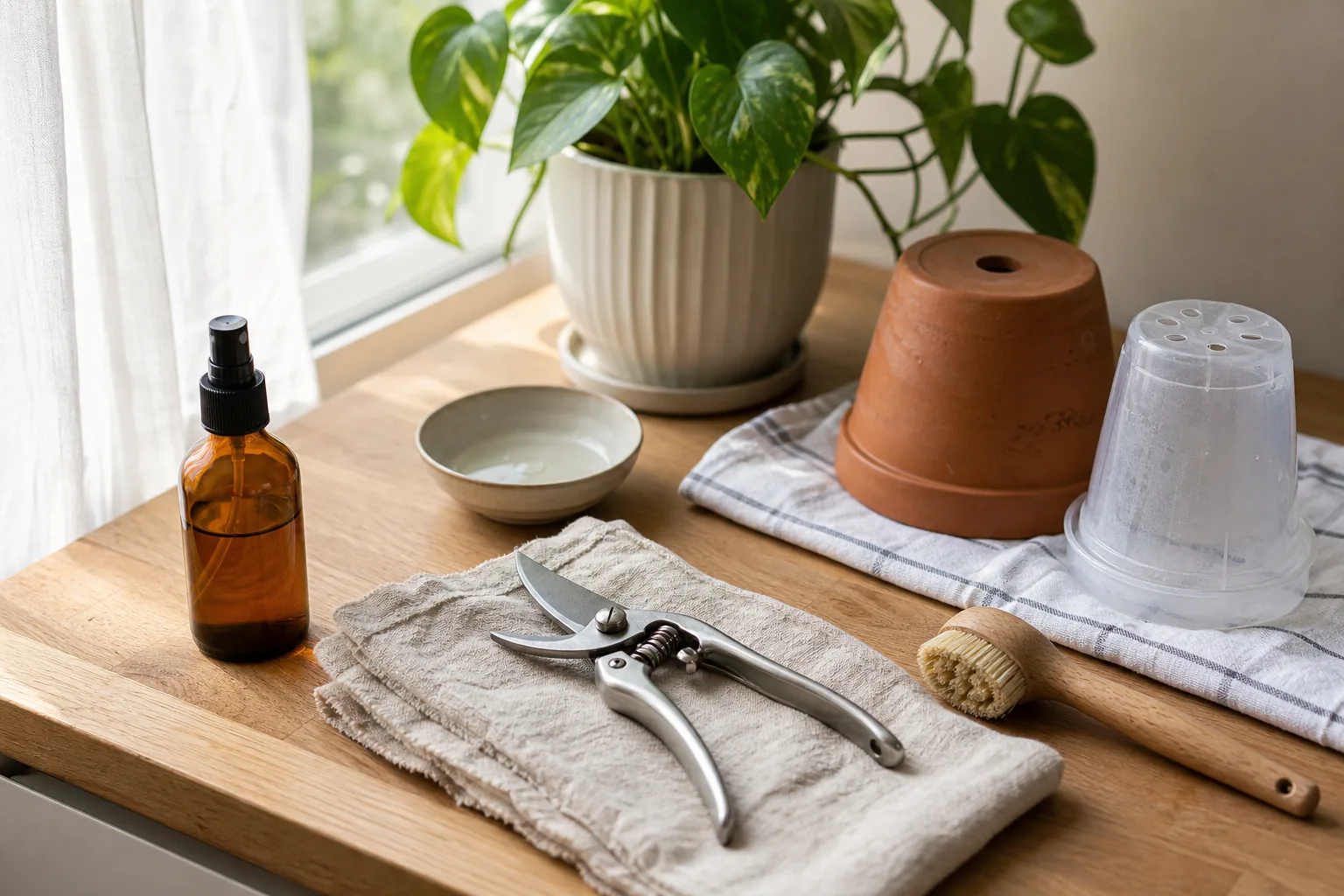
Between healthy plants, the routine is short. Wipe blades with a damp cloth to remove sap and grit. Rinse or brush pots to remove old soil and root bits. Dry everything with a clean cloth or let it air-dry on a towel. That is the foundation every extension guide on tool sanitation starts from, because disinfectants do not penetrate organic matter well.
If you want one extra step, keep a small spray bottle of 70% isopropyl alcohol near your work area and give the blades a quick pass before moving on. It is fast, residue-free, and the option Iowa State Extension describes for sanitizing pruners between cuts.
When to step up to disinfecting
Disinfecting earns its place in specific situations, not after every wipe-down. Escalate when:
- you have just worked on a plant with a known pest, especially something like mealybugs or scale that can cling to blades. After working on a plant with mealybugs, clean your tools and the pot before moving to the next plant, and remember that scale insects are another reason to wipe pruning blades between plants.
- a plant has been lost to root rot or another soil-borne issue, and you plan to reuse the pot.
- you are mid-session and moving between many plants for propagation, division, or repotting.
- a new plant has just come out of quarantine and you want a clean handoff to its new spot.
Outside of those moments, hot soapy water and a dry cloth are usually enough.
Tools to clean: pruners, scissors, knives, stakes, ties, and your hands
Pruners, snips, and scissors are obvious. Less obvious are the moss poles, bamboo stakes, plastic supports, soft plant ties, and the binder clips or Velcro straps that hold everything in place. These get handled often and rarely get cleaned. A quick wipe when you already have the cloth in hand prevents them from becoming a quiet reservoir for pests or sticky residue.
Your hands count too. Wash them between working on a sick plant and the rest of the collection, and again before you start a new session. Gloves are useful but not a substitute for handwashing, since you handle the outside of the gloves with bare hands.
Pots to clean: terracotta, plastic, glazed ceramic, and self-watering reservoirs
Empty the pot and tap or brush out loose soil. Remove old roots and any mineral or salt crust on the rim or inside wall with a brush or old toothbrush. Wash in warm soapy water, rinse well, and let it air-dry fully. While you are refreshing the mix, the pot itself is worth a quick clean at the same time.
For self-watering reservoirs and the saucers underneath ordinary pots, the same sequence applies. Standing water in a saucer keeps the surrounding mix and debris moist, which is the environment fungus gnat larvae need to develop, so emptying, rinsing, and drying the saucer is part of the routine rather than a separate task.
Extension-recommended disinfecting methods
Three options appear across university extension publications. Each has tradeoffs for indoor use.
- 70% isopropyl alcohol. Wiped or dipped on clean blades, it works quickly and leaves little residue. Keep it away from open flames, use it where there is some ventilation, and store the bottle out of reach of pets and children.
- 10% chlorine bleach solution, made as roughly 1 part standard household bleach to 9 parts water. The University of Minnesota Extension cites a contact time of about 2 minutes, the University of Missouri IPM recommends at least 3 minutes followed by rinsing, and the University of Florida IFAS describes a 30-minute soak for deeper disinfection. That spread is real; pick the shorter end for a quick between-plants wipe and the longer soak for a pot that held a plant lost to disease, and rinse with clean water afterward.
- Hot soapy water and a brush. Extension publications describe this as the foundation of routine hygiene. For a session between healthy plants, this is often all you need.
Dish soap helps remove organic matter but is not itself a registered disinfectant, so do not treat a soapy wipe as the final step in a pest situation. Vinegar and hydrogen peroxide come up often in home discussions, but extension publications on pruning tools do not name them as primary options, and they were not highlighted in the sources reviewed here. If you want to use one, treat it as a supplementary step rather than the main disinfectant.
Material compatibility: what to avoid on terracotta, sealed wood, painted finishes, and bare metal
The method should match the material. Pot material affects which cleaning methods are safe; terracotta and porous ceramic need gentler handling than plastic.
- Terracotta is porous and can absorb and later release chemicals into potting mix. Stick to brushing, warm soapy water, and a thorough rinse. Reserve a brief bleach soak for situations where the previous plant was lost to a known soil-borne issue, and rinse very well afterward.
- Glazed ceramic and plastic tolerate the standard methods better, though painted or decorative finishes can be affected by harsh chemicals or prolonged soaking. Test a small area first.
- Bare carbon steel can corrode with extended bleach contact. Stainless steel holds up better. Wiping rather than soaking, and rinsing and drying promptly, protects the edge.
- Sealed or finished wood handles on tools can be damaged by repeated wetting. Wipe the metal, then dry the handle.
Indoor safety: ventilation, gloves, pets, food-prep surfaces, and storage
Bleach and alcohol both deserve a few indoor-specific precautions. Work in a spot with some air movement. Wear gloves if your skin is sensitive. Keep bleach away from ammonia, vinegar, and any cleaner that is not labeled bleach-compatible, because mixing produces harmful fumes. Standard indoor safety guidance is a useful baseline here.
If you disinfect a pot or tool near a kitchen counter, rinse it before it returns to plant use. Store bottles capped and out of reach of pets and children, the same way you would store any household cleaner. For pet households, the practical move is to do the cleaning in a sink or utility area, rinse well, and let things dry before the pot goes back near curious noses.
A simple end-of-session routine you can actually keep
Here is a routine that takes a few minutes and covers most situations.
- Brush or wipe visible soil, sap, and root debris off tools and pots.
- Wash tools and pots in warm soapy water, then rinse.
- If the session involved a sick plant or a pest finding, wipe blades with 70% isopropyl alcohol or dip them briefly in a 10% bleach solution, then rinse and dry.
- For a pot that held a plant lost to root rot, soak it in the 10% bleach solution for a few minutes (longer if a source you trust recommends it), then rinse thoroughly and air-dry completely.
- Wipe stakes, ties, and clips while you are already at it.
- Wash your hands before moving on to the next plant.
The routine is short on purpose. A habit you will actually do beats a thorough routine you will skip.
When cleaning is not enough and a local expert is the next step
If a pest keeps reappearing after you isolate, treat, and clean, the issue is usually upstream of the tools. The plant may need a longer treatment plan, the potting mix may need to be replaced, or a recurring source, like a window with a constant influx of insects, may need attention. At that point, a local nursery, a master gardener program through your state extension service, or a qualified horticulturist can look at the specific plants, room, and routine and suggest the next move.
Cleaning supports everything else you are doing for your plants. It does not replace inspection, isolation, or treatment, and that is the honest line to hold.
Sources
- Iowa State University Extension — How do I sanitize my pruning shears?
- University of Minnesota Extension — Clean and disinfect gardening tools and containers
- University of Missouri IPM — Cleaning and disinfecting pruning tools for orchard crops
- University of Florida IFAS Gardening Solutions — Disinfecting your garden tools
- University of California IPM — Houseplant problems