Plant care
When to fertilize houseplants in winter (and when to skip)
· Updated
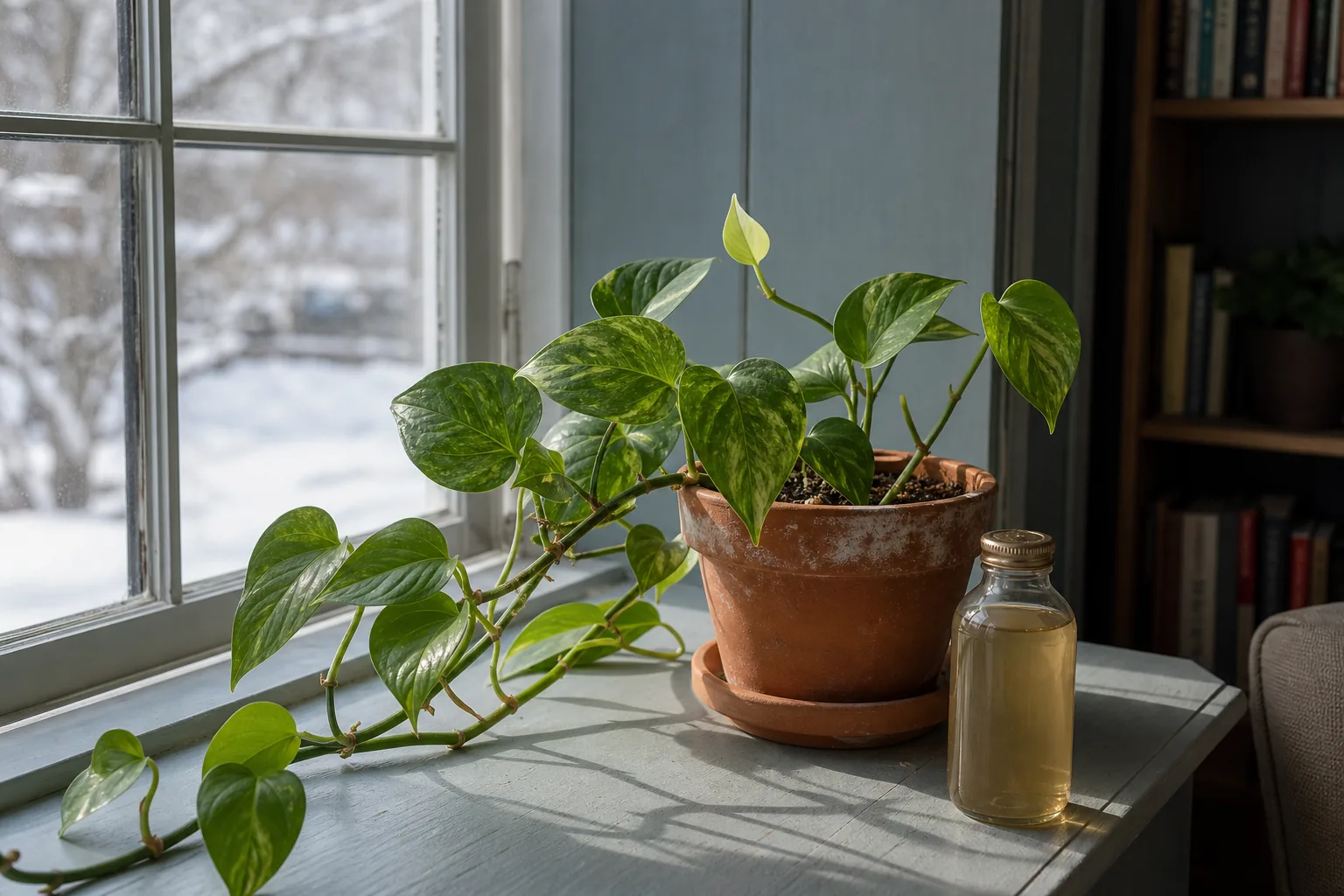
Most houseplants in most ordinary homes need either no fertilizer or only a sharply diluted feed in winter. The deciding factor is what your room is actually doing with light and what your plant is actually doing with that light, not the month on the calendar.
Indoor winter is fundamentally a light problem. The thermostat usually holds steady, but the number of useful daylight hours drops sharply from late fall through early spring, and the light that does arrive is lower in intensity. Plants slow their growth in response, which means they take up and use fewer nutrients. Feeding into that slowdown is a winter mistake the extension services warn against, because unused fertilizer salts build up in the soil and stress roots.
So the practical rule is short. Skip feeding by default in winter. Then make exceptions on two specific conditions: bright windows or grow lights, and a small set of plants that stay active through winter like Christmas cactus and Phalaenopsis orchids.
What ‘winter’ actually changes indoors: light hours, growth rate, and uptake
The change inside a heated home in winter is almost entirely a light change. Most rooms stay in the same comfortable temperature range all year, so temperature is rarely the problem. The problem is photoperiod, the number of hours per day the plant receives useful light.
Research on photoperiod shows that plants respond strongly to day length even when temperature, water, and humidity are held steady. Longer photoperiods increase chlorophyll production, leaf expansion, shoot growth, and root mass. Shorter photoperiods do the reverse, with biomass accumulation dropping and growth slowing, even when every other input is unchanged. That is the mechanism behind the extension recommendation to feed less, or not at all, in winter.
A plant that is not building new tissue cannot use the nutrients you apply. Anything not taken up stays in the soil as salts. A few effects worth naming before you reach for a fertilizer bottle:
- Soil in a dim, cool window stays wet longer because the plant drinks less. Holding off on fertilizer lets you match the slower rhythm without adding another input the plant cannot use.
- Salt buildup shows up faster in winter. Dry indoor air and slower nutrient uptake combine with hard tap water to concentrate minerals at the soil surface and pot rim.
- Yellowing leaves in winter are almost always a light or water signal, not a hunger signal. Adding fertilizer to a yellowing plant under low light usually makes the underlying problem worse.
Read the plant before you reach for the bottle: active growth versus rest
The most useful winter habit is the same habit that serves you year-round: look at the plant before you decide what to do with it. The question is not “is it December?” but “is this plant actively building right now?”
Active growth in a houseplant shows up in a few specific signals:
- New leaves emerging from the growing tip, often smaller and a lighter green than the older leaves below them
- Visible stem or petiole extension, especially at the apex
- New lighter-colored roots visible at the drainage holes
- Unfurling fiddleheads on a fern, a new spear on a philodendron, a fresh tip on a Pilea
Rest looks different. No new leaves for four to six weeks. A held-steady leaf count with a few older leaves dropping. No fresh color at the growing tips. Soil that stays damp longer between waterings.
A plant that has looked exactly the same for a month or more in winter is almost certainly resting. Skip fertilizer for that plant. A plant that pushes even one new leaf each month is signaling it is still using your light, and a very light, infrequent feed is reasonable. The decision is per plant, in your specific room, on the timeline your plant is actually running, not the schedule a fertilizer label suggests.
If you want a fuller picture of how to read a room’s light before deciding where the plant sits, the guide on reading the natural light in your room walks through what to look for at each window through the year.
When a light winter feed is reasonable (and when it isn’t)
Two narrow categories of plant can justify a reduced winter feed. Both are exceptions to the default, not a new rule.
Bright windows or grow-light setups. A plant sitting in a south-facing winter window for several hours of direct sun, or under a full-spectrum grow light on a consistent and lengthy daily schedule, is still photosynthesizing at near-growing-season rates. Horticulture writers note that houseplants under bright light or grow lights can benefit from winter fertilization. The qualifier is to cut your usual strength in half or more, and to feed only when you also see active growth.
Winter-active species. Some popular houseplants set buds or bloom through the winter, which means they are actively drawing on nutrients while everything else slows down. Christmas cactus is the most common example and is widely cited as a reasonable exception to a blanket skip rule. Most Phalaenopsis orchids send up a flower spike in late winter and are often grouped with that exception. These are specific species with specific behaviors. They do not justify a “winter-blooming plants need winter fertilizer” rule, and other plants sitting near them on the same shelf are probably still resting. For these named species, experienced growers sometimes feed lightly while buds and spikes are forming, but the call should still hinge on whether you actually see active growth on that individual plant.
For a fuller primer on what fertilizer actually does and how to read a label, see houseplant fertilizer basics.
When winter feeding is not reasonable:
- A plant you have just moved to a darker corner for the season
- A plant that has been visibly resting for a month or more
- A plant showing yellowing, leaf drop, or wilting that has not been diagnosed, since these are usually light, water, or root issues, not nutrient issues
- A plant in a noticeably cold room where roots stay cool for long stretches, because cold roots take up even less than cool ones
How to phase back into spring feeding without burning fresh roots
Spring does not arrive on the calendar either. It arrives when your windows start delivering longer, stronger days and your plants respond with new leaves and stems. A safe hand-off looks like this:
- Start watching your plants weekly from late winter on. The first new leaf or expanding internode is the green light you are waiting for, not March 1.
- A common habit among experienced growers is to start at half the label strength for the first two or three feedings of the season. Fresh, pale new growth has tender tissue and is the easiest to burn.
- Move to full label strength only when growth is clearly established, with multiple new leaves across several stems, new roots visible at the drainage holes, or rapid unfurling on a previously resting fern.
- Flush the pot with plain water every few feedings to wash accumulated salts out of the soil, especially if you have been heavy-handed in previous seasons.
For the rest of the winter routine — light, water, drafts — the broader winter houseplant care guide covers how all those decisions fit together.
If you are also adjusting your watering rhythm at the same time, pair them. Both follow the same observation-based logic. The watering-by-observation approach treats each plant on its own timeline instead of on a fixed schedule, which is the same shift the winter fertilizing decision asks you to make. For a practical weekly check that holds the whole routine together, the weekly houseplant care routine is a useful reference.
What to skip, what to read on the label, and what not to assume
A few habits are worth keeping through winter even when you are not feeding:
- Liquid fertilizers are easier to dial back to half or quarter strength than slow-release granules, which release on their own schedule.
- Tap-water minerals accumulate faster in dry indoor winter air. Hard-water spots on the pot rim or a white crust on the soil surface are a signal to skip the next feed and flush the pot with plain water.
- Never apply fertilizer to dry soil. Water first, then feed, so the salts disperse through moist mix instead of concentrating against dry roots.
Things to skip:
- Any “winterizing” fertilizer sold for outdoor plants. Indoor houseplants do not need that formulation.
- Mixing fertilizer into water you are using to flush a suspected salt problem. Flush with plain water, then resume feeding later.
- Compensating for yellowing leaves with fertilizer. Yellowing in winter is almost always light, water, or root related. Adding nutrients to that picture usually adds stress.
A short winter-feeding checklist you can run this week
A short list you can run on a single afternoon, before the bottle comes out:
- Look at each plant for any new growth at the tips, whether that is a new leaf, new color, or a new internode.
- Note the room’s light. South-facing direct sun, a grow light on a steady schedule, or bright indirect all count as “still growing” conditions. A dim corner or a north-facing window in midwinter counts as “rest” conditions.
- If both signals say rest, do nothing. Skip the next feed.
- If both signals say active, feed at half the label strength on already-moist soil, no more than once a month.
- If the signals disagree, with a bright window but no new growth, wait. Light alone is not the same as growth.
- Check the pot rim and soil surface for white salt crust. If you see it, skip fertilizer and flush with plain water.
- Set a reminder to check the plants again in two weeks. Winter decisions update as the room and the plant update.
The frame to keep in your head is small. Most houseplants in most rooms want either no fertilizer or a sharply diluted feed in winter, because short days slow growth even when the room stays warm. The plants that genuinely need winter feeding are the ones actively building, whether in a bright window, under a grow light, or coming into bloom. The plants that do not need it are the ones you cannot tell apart from a photograph of themselves from six weeks ago. Spring is when new growth appears, not when a date on the calendar arrives. Feed the plant, not the month.
Sources
- Iowa State University Extension and Outreach: Should houseplants be fertilized in winter?
- Missouri Botanical Garden: When and how should I fertilize my indoor plants?
- University of Kentucky: Seven simple steps to keep your indoor plants thriving through colder months
- PMC / NCBI: Photoperiodic Effect on Growth, Photosynthesis, Mineral Elements
- Scotts Miracle-Gro: Indoor Flowers that Bloom in Winter