Plant care
Care guides for the plants you love.
Clear, evidence-led houseplant guidance for the way plants actually live at home.
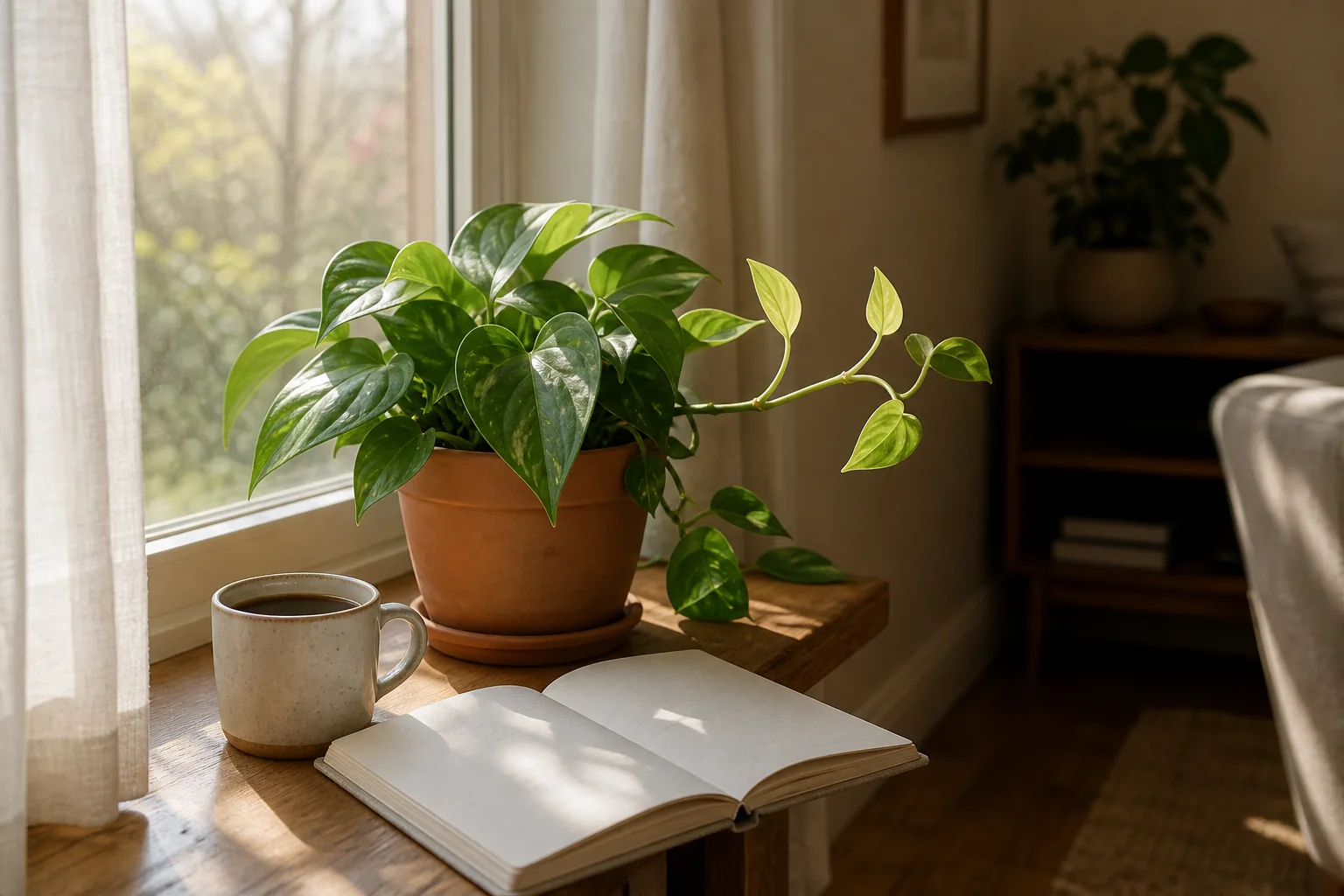
Spring houseplant care: a room-by-room reset
A room-by-room spring houseplant care guide that anchors every change in observable cues — light, growth, soil — rather than a calendar date.
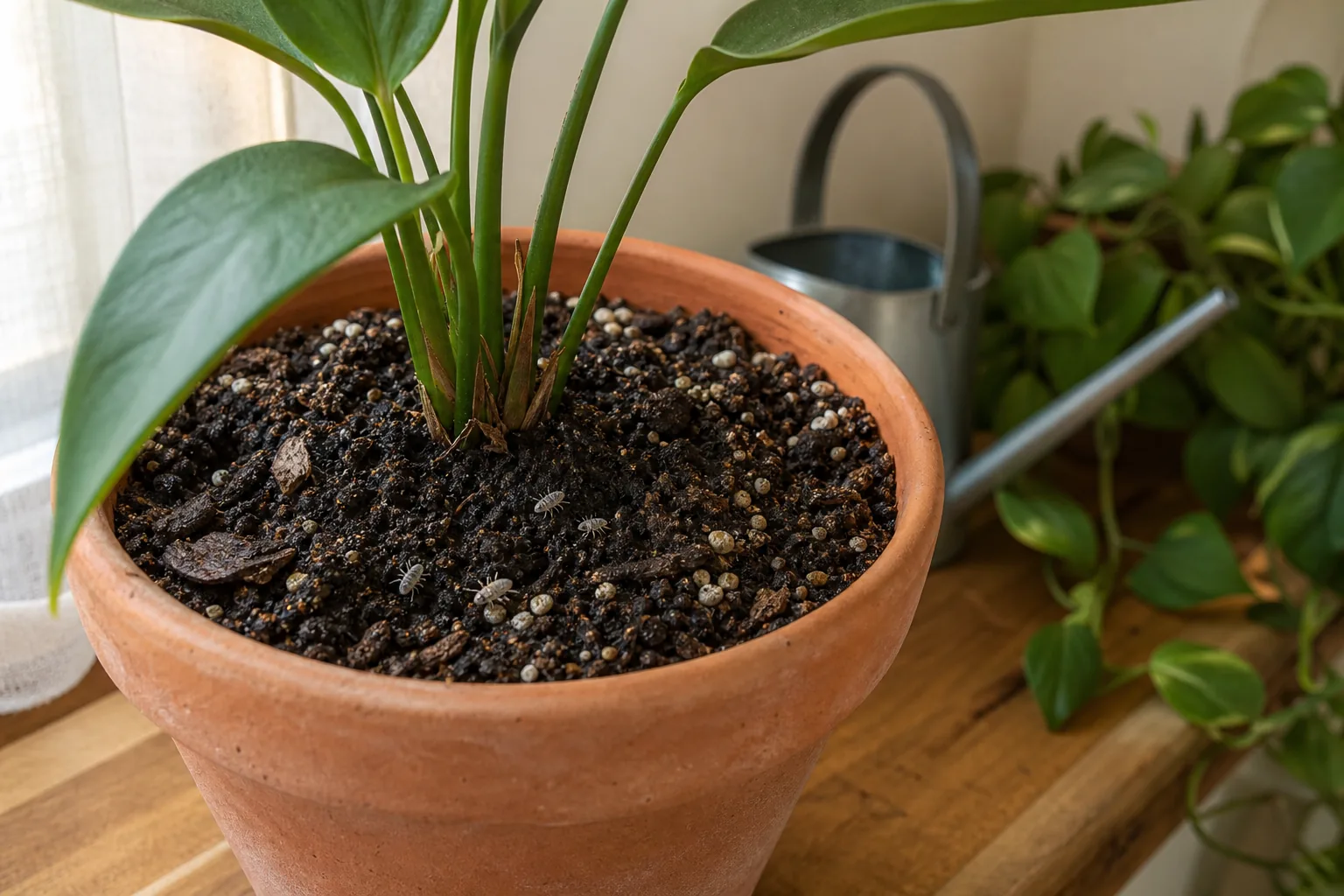
Springtails vs fungus gnats: how to tell which one is in your houseplant soil
Springtails and fungus gnats both show up near houseplant pots, but they are different organisms with different risks. Here is how to tell them apart by sight and behavior, and what the proportionate response is for each.
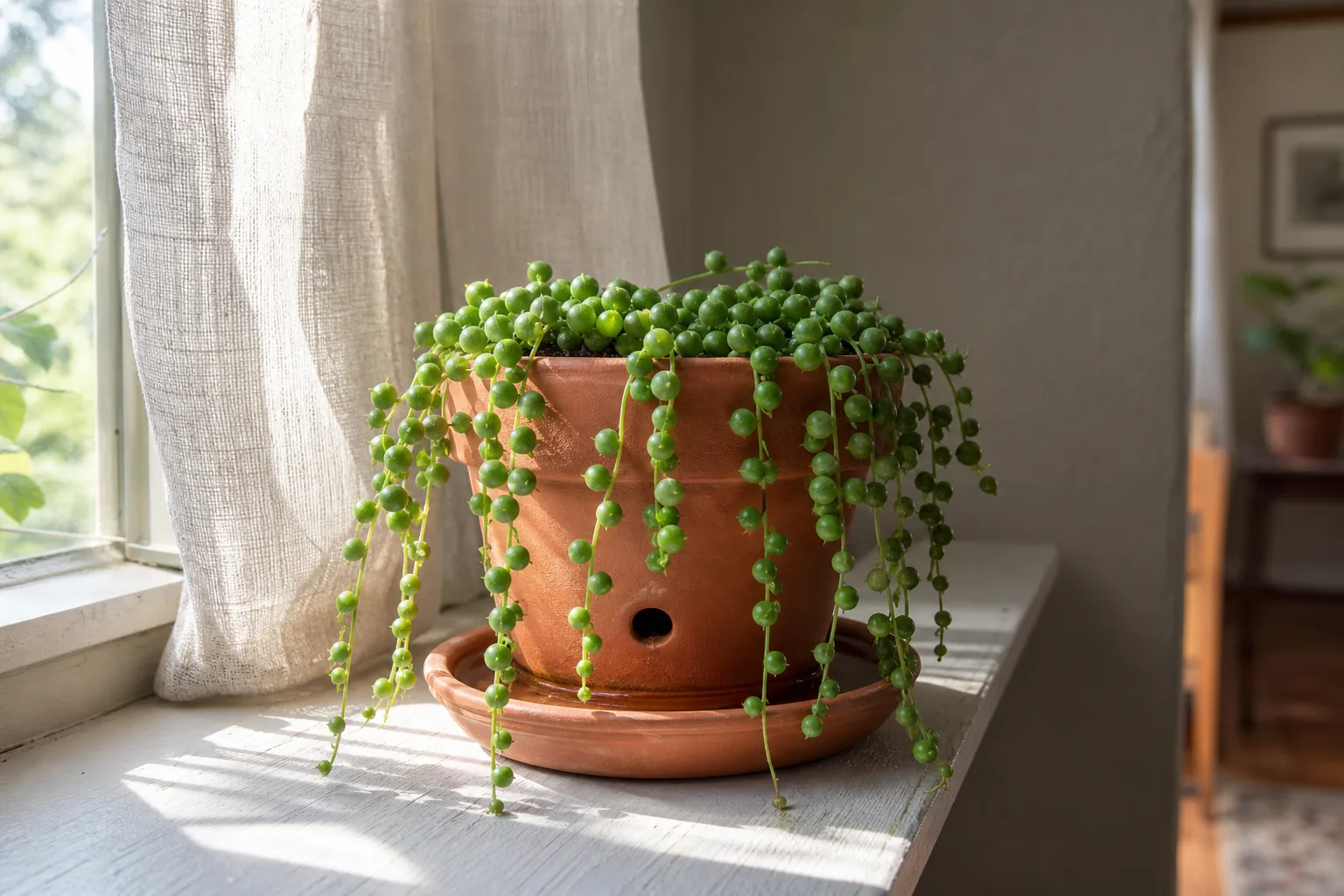
String of pearls care indoors
Indoor string of pearls (Curio rowleyanus) care built around the two real constraints: enough bright light to keep the pearls plump and stems dense, and a fast-draining pot so the shallow roots do not rot.
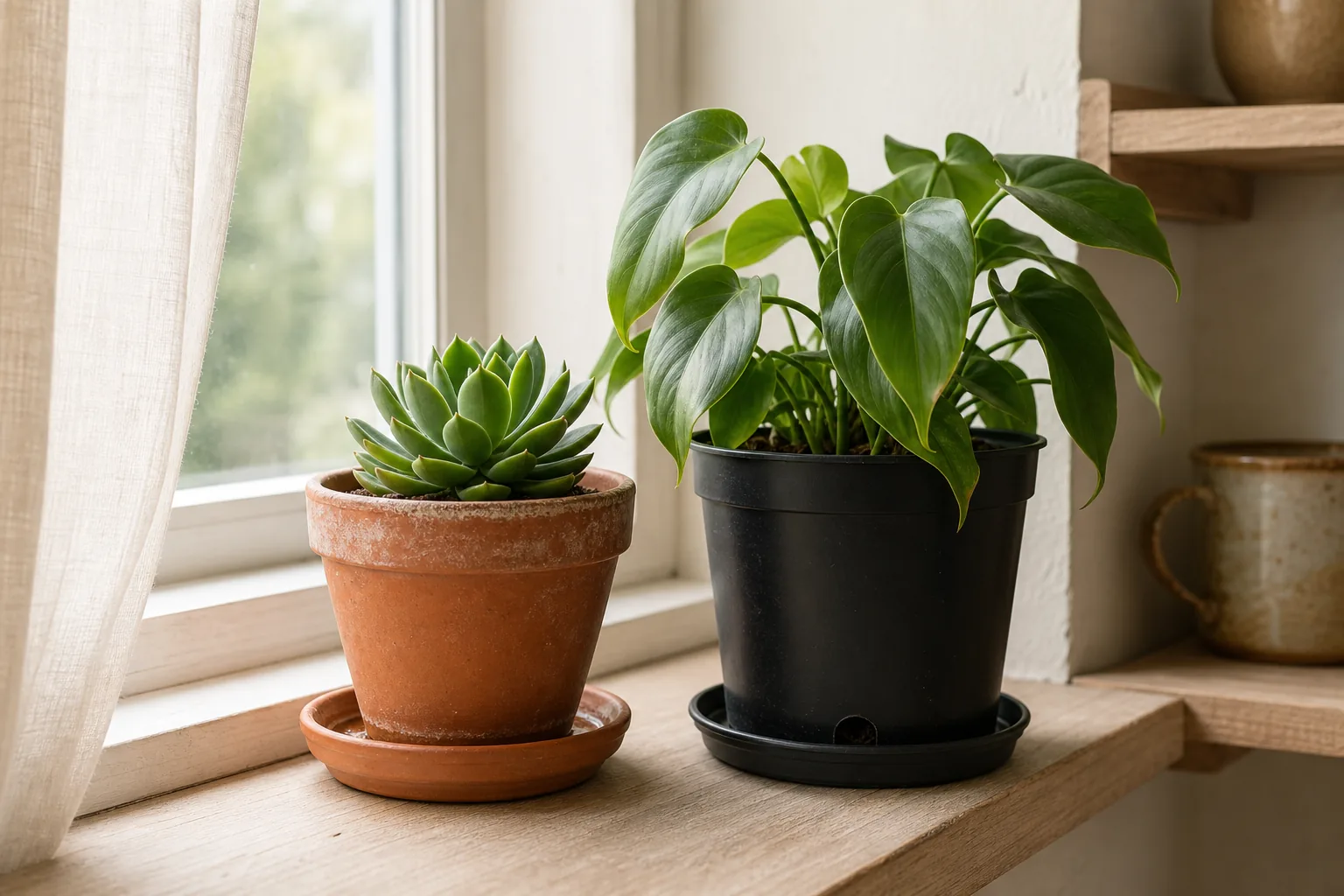
Terracotta vs plastic pots for houseplants: a behavior-led comparison
Unglazed terracotta vs plastic pots for indoor houseplants, compared by what each material physically does in a real room, matched to plant type and watering rhythm.
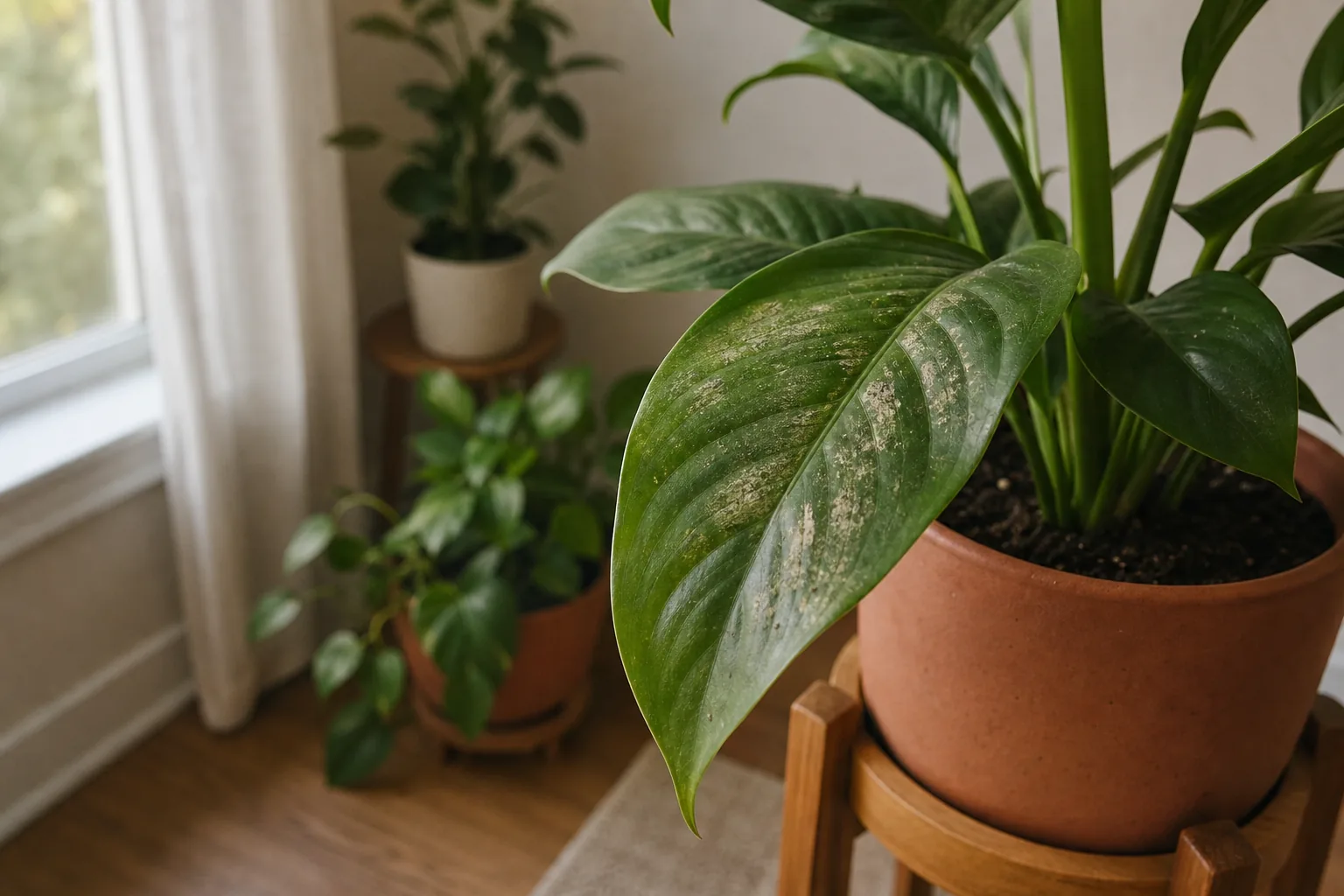
Thrips on houseplants: reading the damage before choosing a response
How to recognize thrips on indoor houseplants from the silvery patches, dark frass specks, and distorted new growth they leave behind, with look-alike cues.
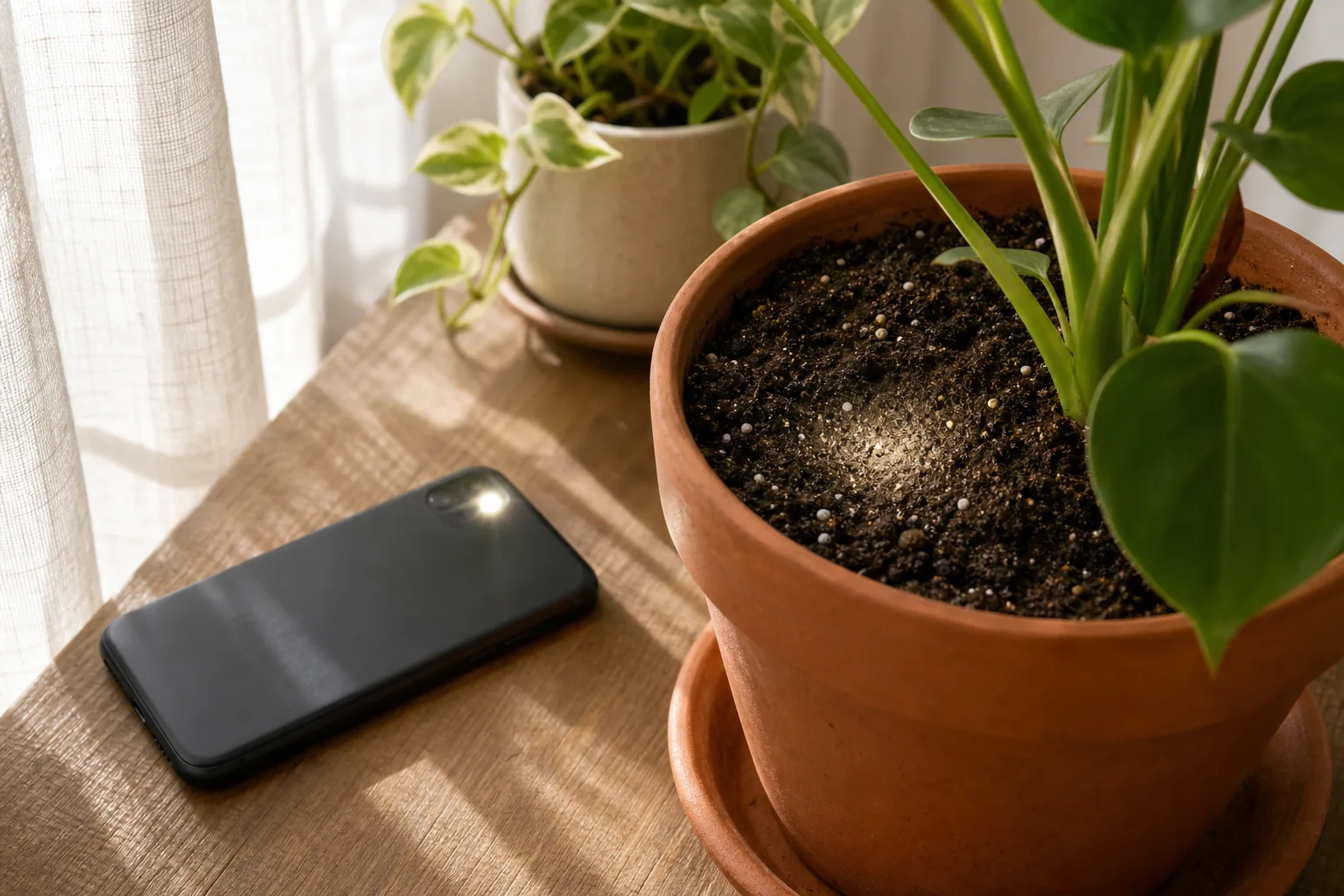
Tiny bugs in houseplant soil: a calm identification guide
Identify tiny bugs in houseplant soil using four calm observations: size, color, movement, and location. A triage-first guide with extension-backed next steps.
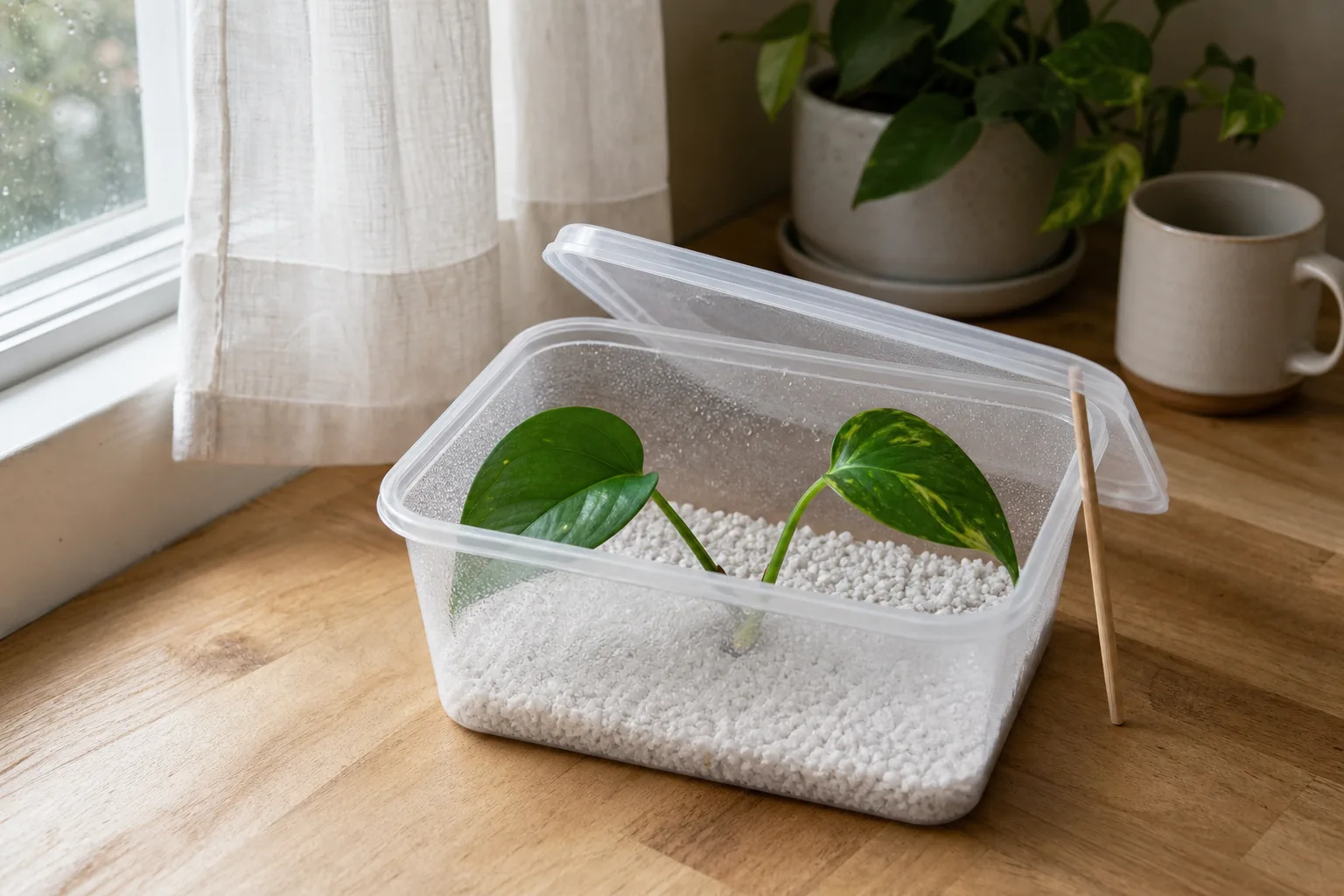
Using a propagation box without trapping too much moisture
Learn how to set up and manage a propagation box so it raises humidity around cuttings without trapping so much moisture that the medium goes soggy.
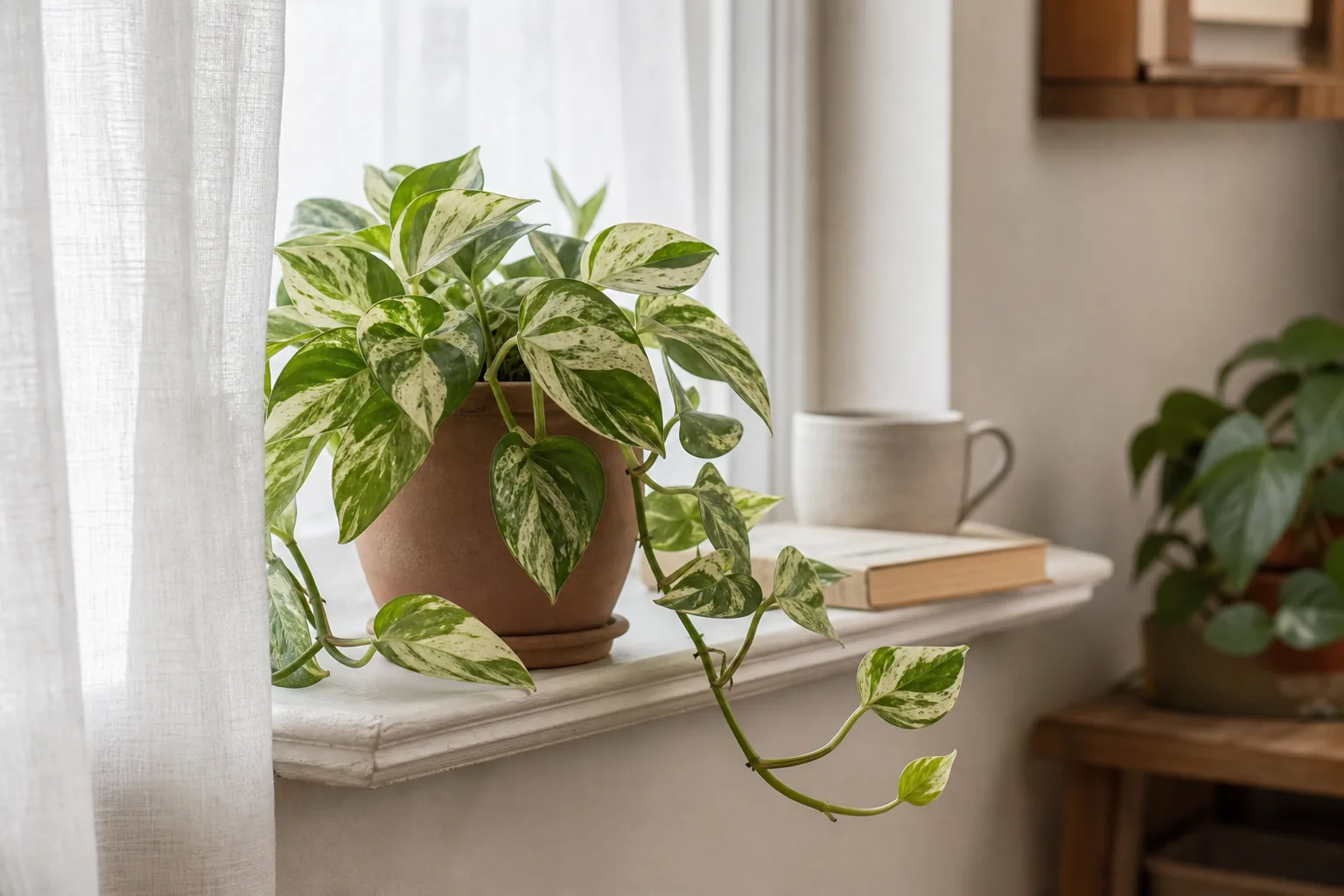
Variegated houseplants and light: a realistic expectation
Variegated houseplants usually need brighter, steadier indirect light than green counterparts, but pale sections scorch faster in direct sun. How to read the plant and the room before moving it.
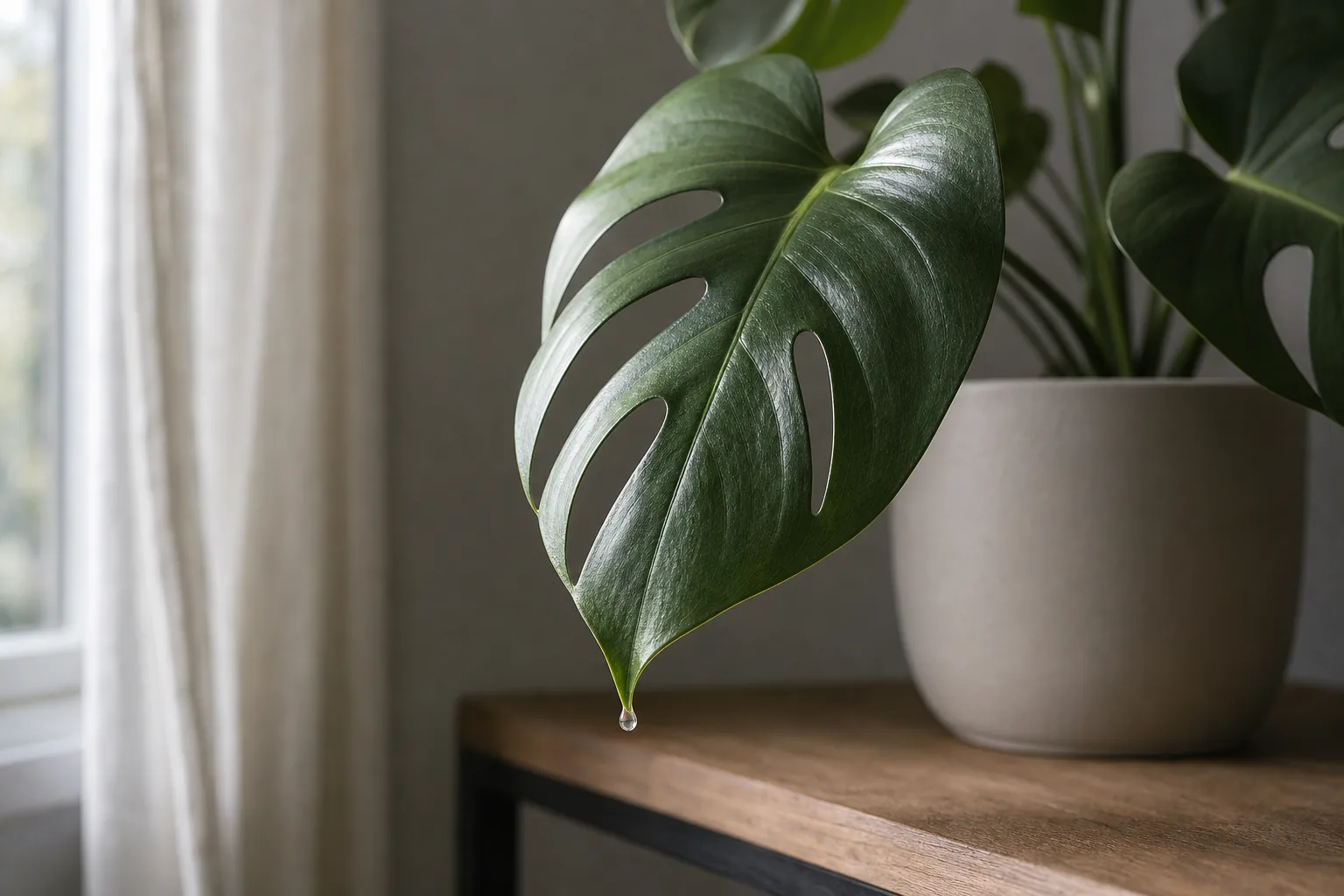
Water droplets on houseplant leaves: guttation, and when it is worth a closer look
Clear droplets at the leaf tips of a houseplant are usually guttation, a normal root-pressure process. Here is how to tell it from honeydew and when to check the watering rhythm, the pot, and the light.
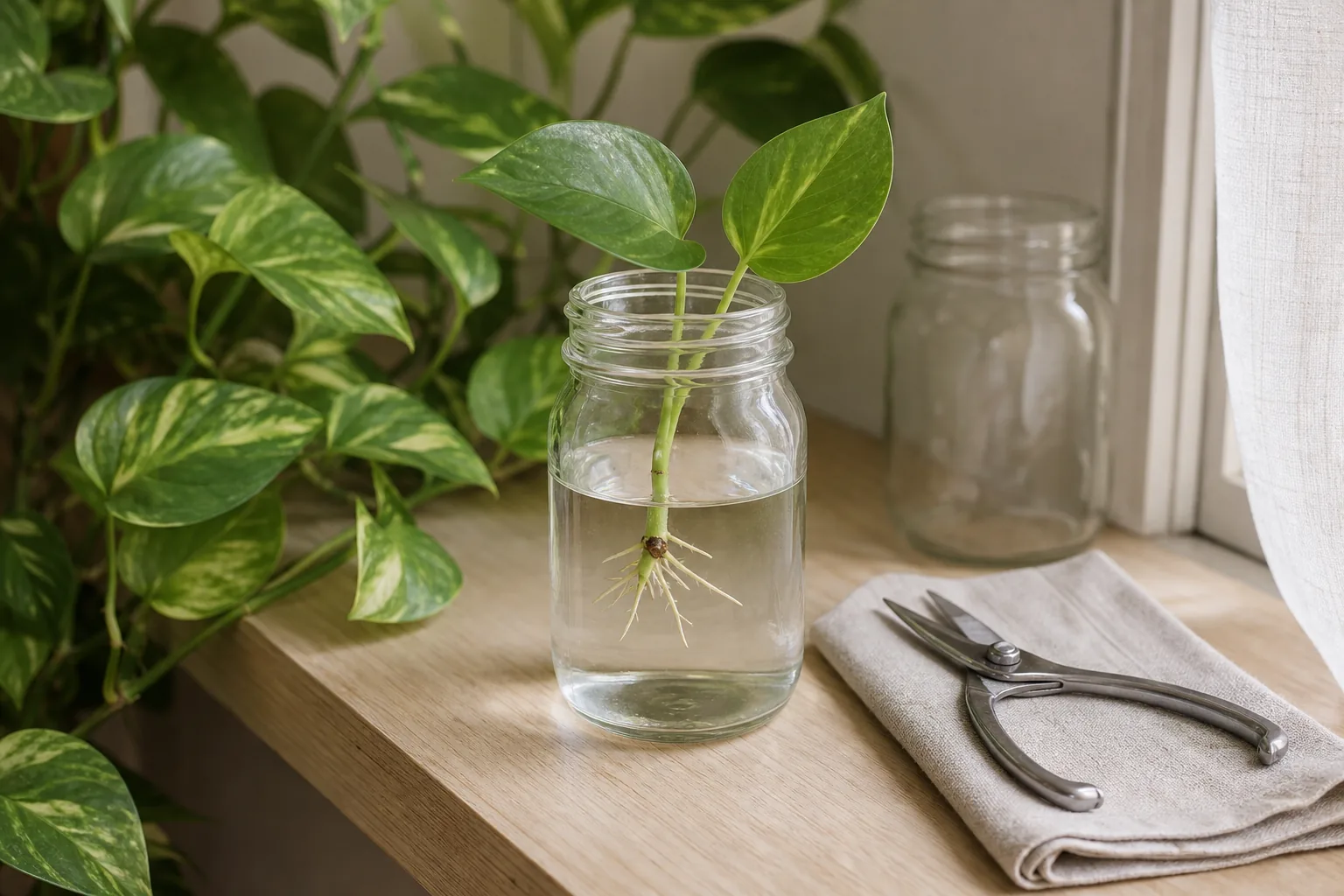
Water propagation for houseplants: a calm, observation-first guide
A practical, observation-first guide to water propagation for houseplants: where to cut, what a node is, when to refresh the water, how to read new roots, and how to handle the move to soil.
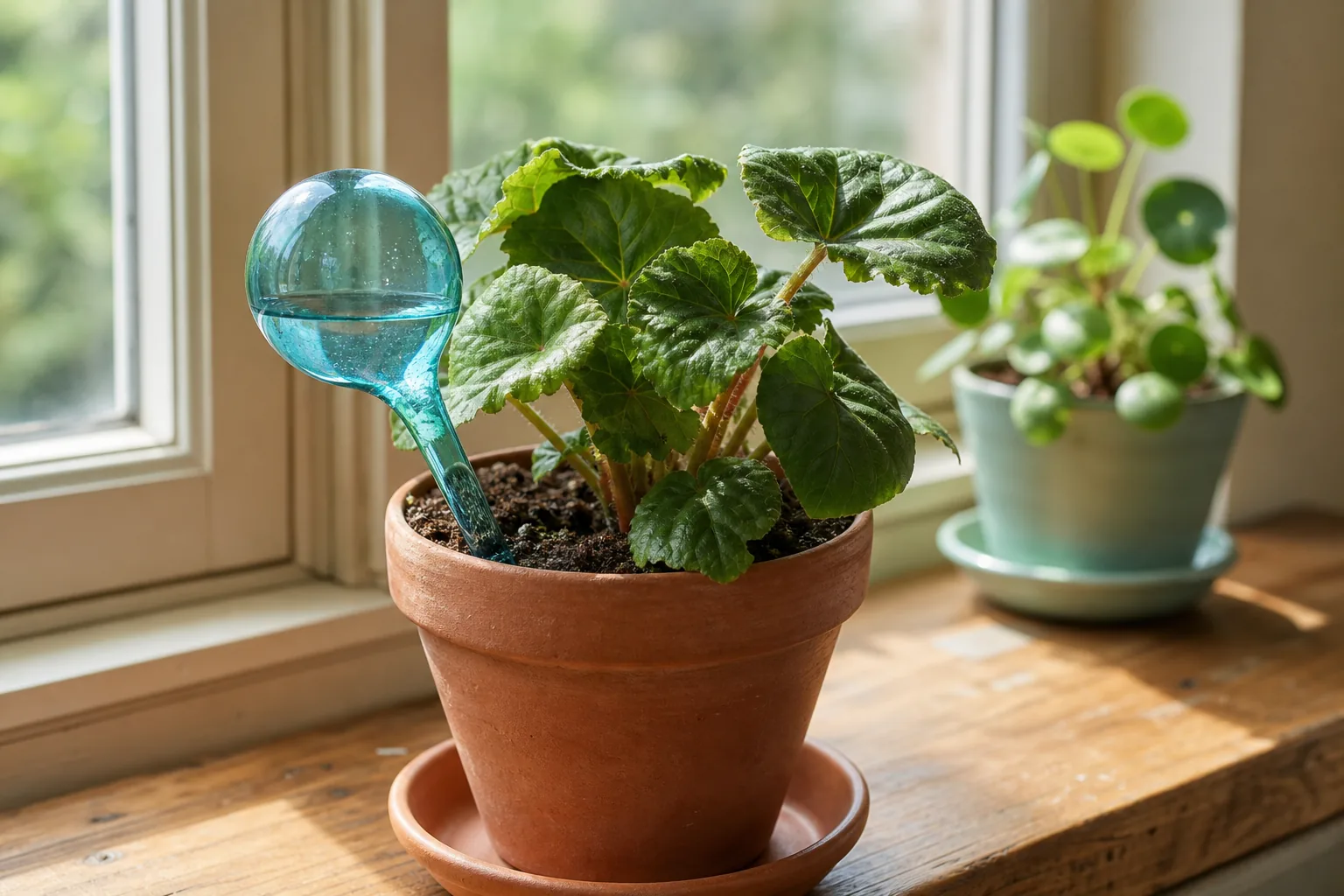
Watering globes for houseplants: how they work and when they fit
A practical look at watering globes for houseplants: the vacuum-and-capillary release, the variables that change how fast a globe empties, and the pot, mix, plant, and room conditions where a globe fits or keeps the soil too wet.
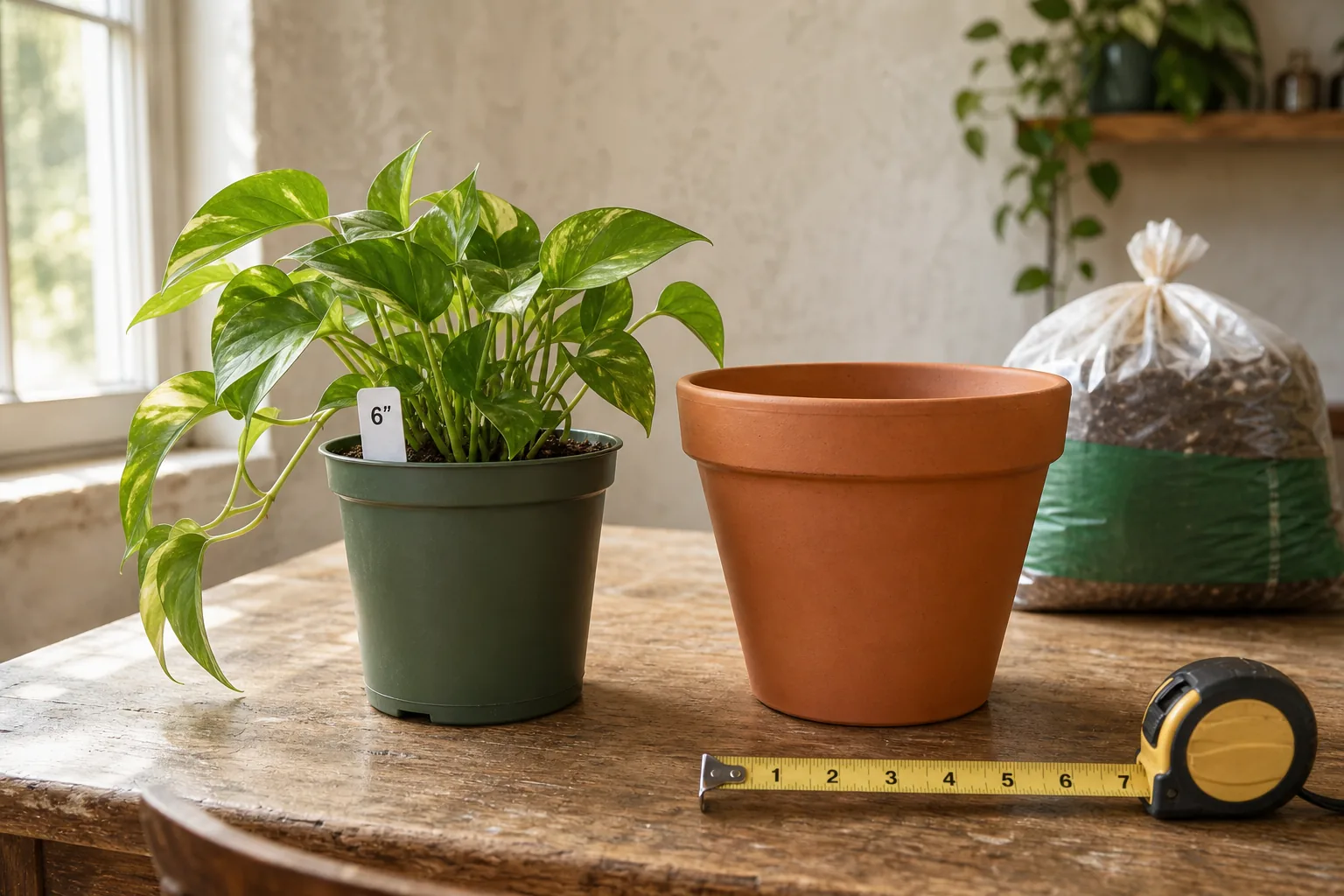
What size pot to use when repotting a houseplant
A practical guide to choosing the next pot size when repotting a houseplant, with how to measure, how much to size up, and when the usual rule needs to bend.