Plant care
Rubber plant care: an observation-first guide for indoor Ficus elastica
· Updated
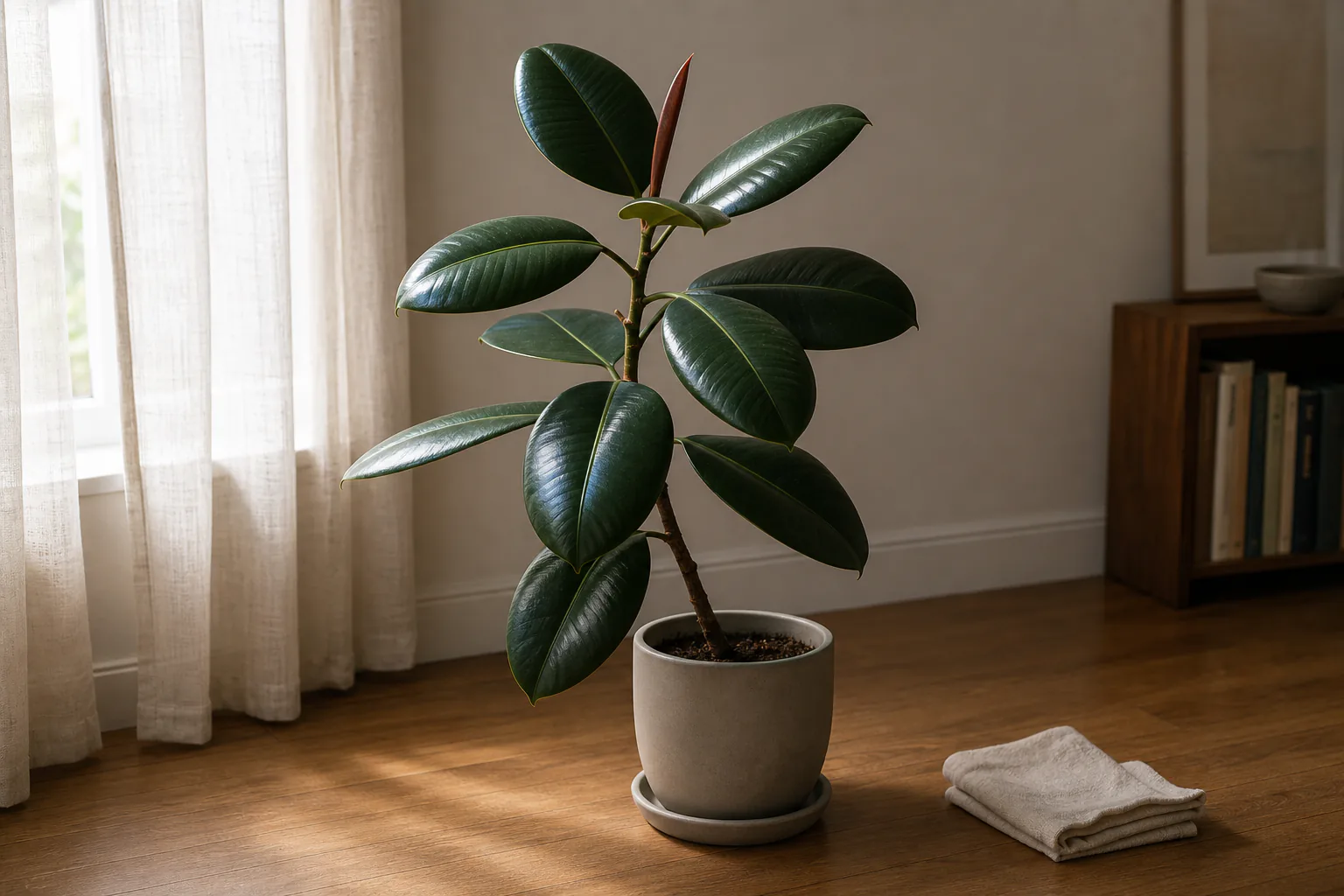
A rubber plant (Ficus elastica) is one of the easier houseplants to read once you slow down and look at the room before you look at the plant. Give it the brightest indirect light your space actually offers, water only after the upper portion of the potting mix has dried down (the depth depends on the size of the pot), wipe the larger leaves occasionally with a damp soft cloth, and decide early whether the room has space as the plant matures. In a real home, light, pot size, and room dimensions are what change what “happy” looks like, not a fixed schedule.
What a rubber plant is asking from an indoor room
A rubber plant is not asking for a tropical greenhouse. It is asking for three things the room can usually provide: steady, bright indirect light, a potting mix that drains and dries between waterings, and a spot it can settle into without being moved around or hit by cold drafts. NC State University Extension notes that the species prefers to remain in one location and reacts poorly to drafts and cold temperatures, which is a useful reminder that the best thing you can do for it is often to stop fussing with it.
The rubber plant is also a plant that shows you what it needs. Its leaves are large, glossy, and slow to replace, so a change in light, water, or temperature shows up on the leaf surface before it shows up anywhere else. That makes it a good plant for someone who wants to learn to read a houseplant rather than follow a script.
Bright placement without burning the leaves
Reputable sources, including NC State University Extension, describe the indoor light preference as bright indirect light or partial shade, with protection from harsh afternoon sun. In practice, that means the brightest spot in the room that does not get a long, hot blast of direct sun through a west or south-facing window. A short stretch of gentler morning sun through an east-facing window is generally tolerated, though prolonged direct afternoon sun through a west or south-facing window can scorch the leaves.
Before you commit the plant to a corner, it is worth reading the room first. Our guide on how to read the natural light in your room walks through a simple way to test whether the brightest spot is genuinely bright, whether it gets direct sun and for how long, and what changes across the seasons. Once you have a short list of candidate spots, the plant can help you decide: if new leaves come in pale, washed out, or with brown patches, the spot is too bright. If stems stretch and the gaps between leaves get longer, the spot is too dim.
A rubber plant is sometimes sold as a “low light plant.” It is more accurate to call it low-light tolerant. It will survive in a dimmer spot, but growth will slow, new leaves may come in smaller, and the plant will lean toward whatever light it can find. If you want a full, presentable plant on a shelf or floor, the brightest indirect spot the room offers is the right starting place.
Reading dry-down in a pot that holds more mix
A rubber plant does not want a calendar. It wants the upper portion of the potting mix to dry before it is watered again, and the depth of that dry-down zone changes with the size of the pot. In a small starter pot, the top half inch or so is the right zone to feel before watering. In a larger, deeper pot, the dry-down zone is deeper, and watering becomes less frequent because the larger volume of mix holds moisture longer. This is one of the most useful single observations in indoor plant care, because it applies just as well to other large-leaved houseplants as the pot gets bigger.
The way to read it is simple. Press a finger into the mix to the depth that matches the pot, water only when that zone feels dry, and let the rest of the water drain through. In lower light and in winter, the mix stays wet longer, so the gap between waterings stretches out. In brighter, warmer conditions during the active growing season, the gap shortens. The plant, the pot, and the season are all in the answer at once.
A well-draining mix helps with all of this. A standard indoor potting mix with a small amount of perlite or pine bark gives the roots air and lets the upper layer dry predictably. A pot with a drainage hole is worth the small extra step of using a saucer, because sitting in standing water is the most common cause of trouble for this species.
The larger leaves collect dust: a simple cleaning habit
A rubber plant’s leaves are large enough to act as a shelf for household dust, and a dusty leaf is a leaf that is working below its capacity. NC State University Extension recommends cleaning the leaves of Ficus elastica with a damp soft cloth or sponge, and that is the entire method. For plants too large to move easily, university extension guidance likewise recommends a damp cloth.
The routine is short. Support the underside of a leaf with one hand, wipe the top with a soft, damp cloth, and let the leaf air-dry out of direct hot sun. Putting wet leaves back into a hot sunny window can leave burn marks, so it is worth either wiping in the evening or moving the plant a step back from the glass while it dries. If the plant is small enough to carry, a quick rinse in a shower or sink works as well, again with the leaves allowed to dry away from harsh sun.
The other reason to wipe the leaves is that cleaning is also inspection. You will see dullness returning before the plant is showing it elsewhere. You will see leaf-edge browning that points to dry air or mineral buildup. You will see the first signs of pests, which are much easier to deal with when they are caught early on a leaf you are already looking at. If a leaf is damaged or showing signs of disease, removing it cleanly and disposing of it rather than leaving it near other plants keeps the rest of the plant in better shape.
There is no need for commercial leaf-shine products, oils, milk, or any other coating. The leaves are naturally glossy, and a damp cloth restores that gloss without adding anything the plant would have to handle.
Space to grow: thinking ahead without promising a height
This is where a rubber plant differs from a lot of tabletop houseplants. It does not stay small on its own. Clemson University’s Home and Garden Information Center describes indoor rubber plants as capable of reaching roughly 6 to 10 feet tall or more if there is enough space, with size that can be managed by pruning. No reputable source gives a single fixed indoor height, because the answer depends on the light in the room, the size of the pot, and whether the plant is being pruned.
The honest way to think about this is to plan space before the plant arrives, not after. Look up from where the plant will sit. Is there room for a tall, branching plant without crowding a doorway, a window, or a ceiling fan? Is the floor strong enough for a heavier pot? If the answer is yes for a few years of growth but not indefinitely, that is fine. Pruning is a normal practice for this species and a reasonable way to keep a rubber plant at a comfortable size for the room. Cuts and broken stems release a milky sap; as a general precaution, it is reasonable to wear gloves, wash hands afterward, and avoid rubbing your eyes while working with the plant. If your skin is easily irritated, that is worth keeping in mind.
Two practical details are worth knowing as the plant gets taller. Indoor rubber plants often do not develop the thick, self-supporting trunks that outdoor plants do, so a stake or dowel is a normal addition, not a sign of failure. And because the plant prefers to stay in one spot, choosing the floor location once and then leaving it there is usually better than rotating it around the room.
Common patterns a rubber plant shows
A rubber plant communicates through its leaves, and the same leaves you are wiping are the ones telling the story. A few patterns to look for, none of which is a diagnosis on its own:
- A sudden drop of otherwise healthy lower leaves often follows a change in light, temperature, or location. The plant does not like being moved, and it shows that by dropping leaves before it settles in again.
- Yellowing leaves, especially lower ones, on a plant that is otherwise holding steady usually point to the watering pattern, often too much rather than too little.
- Brown, crispy edges or pale patches on leaves facing the brightest light often mean the spot is too hot or too direct, and a step back from the window is the first thing to try.
- A long, bare stem with widely spaced leaves usually means the plant is reaching for more light, even if the spot reads as “bright” to a person in the room.
- Sticky residue, webbing at the leaf joints, or small specks on the underside of a leaf are reasons to slow down, look more closely, and reach out to a local nursery, a county extension office, or another qualified resource rather than guessing at a treatment.
Ficus species are commonly listed in horticultural and general awareness references as potentially irritating to cats and dogs if chewed, but specific safety questions are better directed to a veterinarian or a poison-control resource rather than to a plant care article. Houseplant Supplies is not a substitute for either.
A short weekly and seasonal habit checklist
A rubber plant rewards a small, steady routine more than a big one. Once a week, feel the top of the mix at the depth that matches the pot, and water only when that zone has dried. Once a month or so, wipe the larger leaves with a damp soft cloth and look them over as you go. Once a season, step back and look at the plant as a whole: is it leaning, is it crowding the room, is the spot still the brightest indirect place it can be without being in a draft? Make one or two small adjustments rather than several at once, and give the plant a few weeks to respond before changing anything else.
If you are bringing a new rubber plant home, the same habits apply, with the additional patience that a new plant usually needs a few weeks to settle into the light and temperature of a new room. The leaf drop that sometimes follows a move is normal and is not a verdict on the plant.
That is most of what an indoor rubber plant asks for. Bright indirect light, a pot that drains, a leaf surface that can breathe, a corner with room to grow, and a reader who looks at the plant before reaching for the watering can.
Sources
- NC State University Extension, Ficus elastica Plant Toolbox: https://plants.ces.ncsu.edu/plants/ficus-elastica/
- Clemson University Home and Garden Information Center, Rubber Plant: https://hgic.clemson.edu/factsheet/rubber-plant/
- Mississippi State University Extension, Care and Selection of Indoor Plants: https://extension.msstate.edu/publications/care-selection-indoor-plants
- Espoma, Rubber Plant Care and FAQs: https://www.espoma.com/indoor-gardening-2/rubber-plant-care/
- Joy Us Garden, Rubber Plant Care: A Ficus Elastica Growing Guide: https://www.joyusgarden.com/rubber-plant-growing-tips/